District Spotlight
St. Joseph Followed Four Annual Declines With a 14.5-Point Graduation-Rate Jump
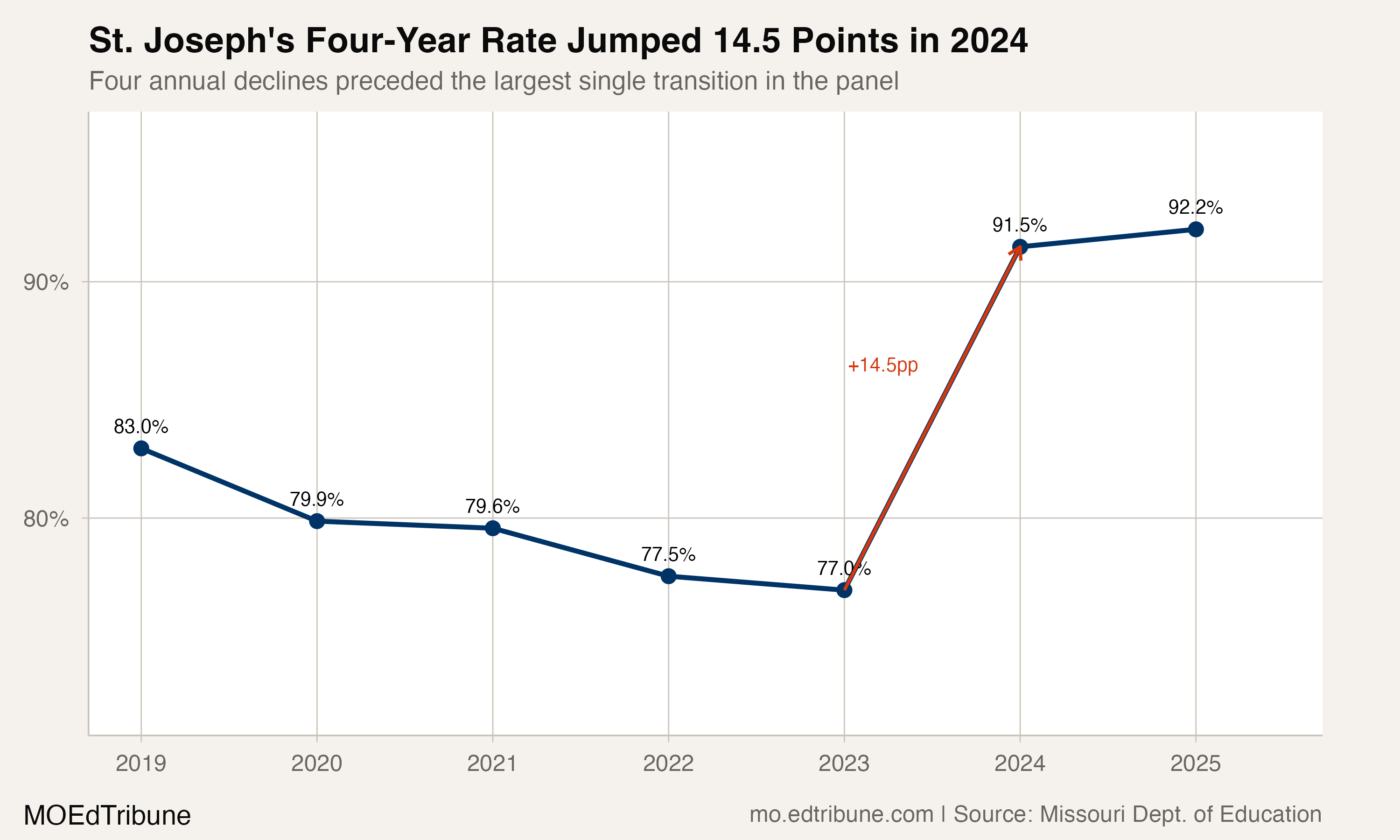
St. Joseph's graduation rate fell from 83.0% to 77.0% across four annual declines, then rose 14.5 points in 2024 and reached 92.2% in 2025.
Show-Me State Education Coverage, Driven by Data
Education News & Data
Local education reporting from every corner of Missouri, grounded in Missouri Department of Education data.
Springfield, Rockwood and Lee's Summit each enrolled fewer students in 2025-26 than in 2019-20, with Rockwood down 11.4% in the state's published counts.
Gordon Parks' chronic absence declined across three annual transitions. Named district examples show other endpoint improvements, with complete reported histories and explicit limits.
A complete attendance comparison finds sustained relative differences, but most qualifying district-level reports ended above their own earlier rates.
Missouri's 37 charter LEAs reported chronic absence rates from 0.0% to 70.1% in 2024-25, with a median of 41.3% against 15.2% for school districts.
St. Joseph's graduation rate fell from 83.0% to 77.0% across four annual declines, then rose 14.5 points in 2024 and reached 92.2% in 2025.
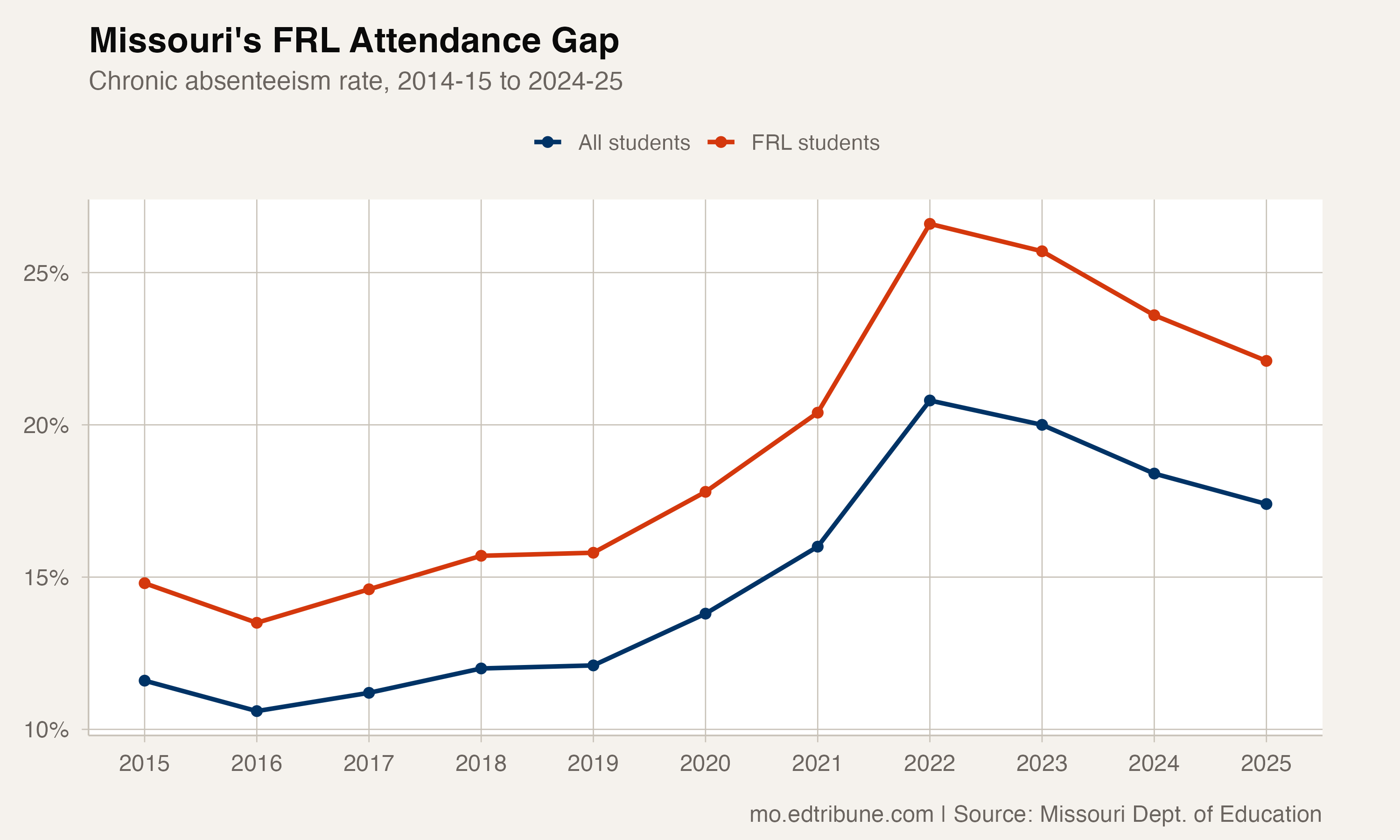
Missouri's FRL chronic absenteeism gap was 8.6 percentage points in 2024-25, up from 4.7 points in 2014-15, after a 10.4-point peak in 2021-22.
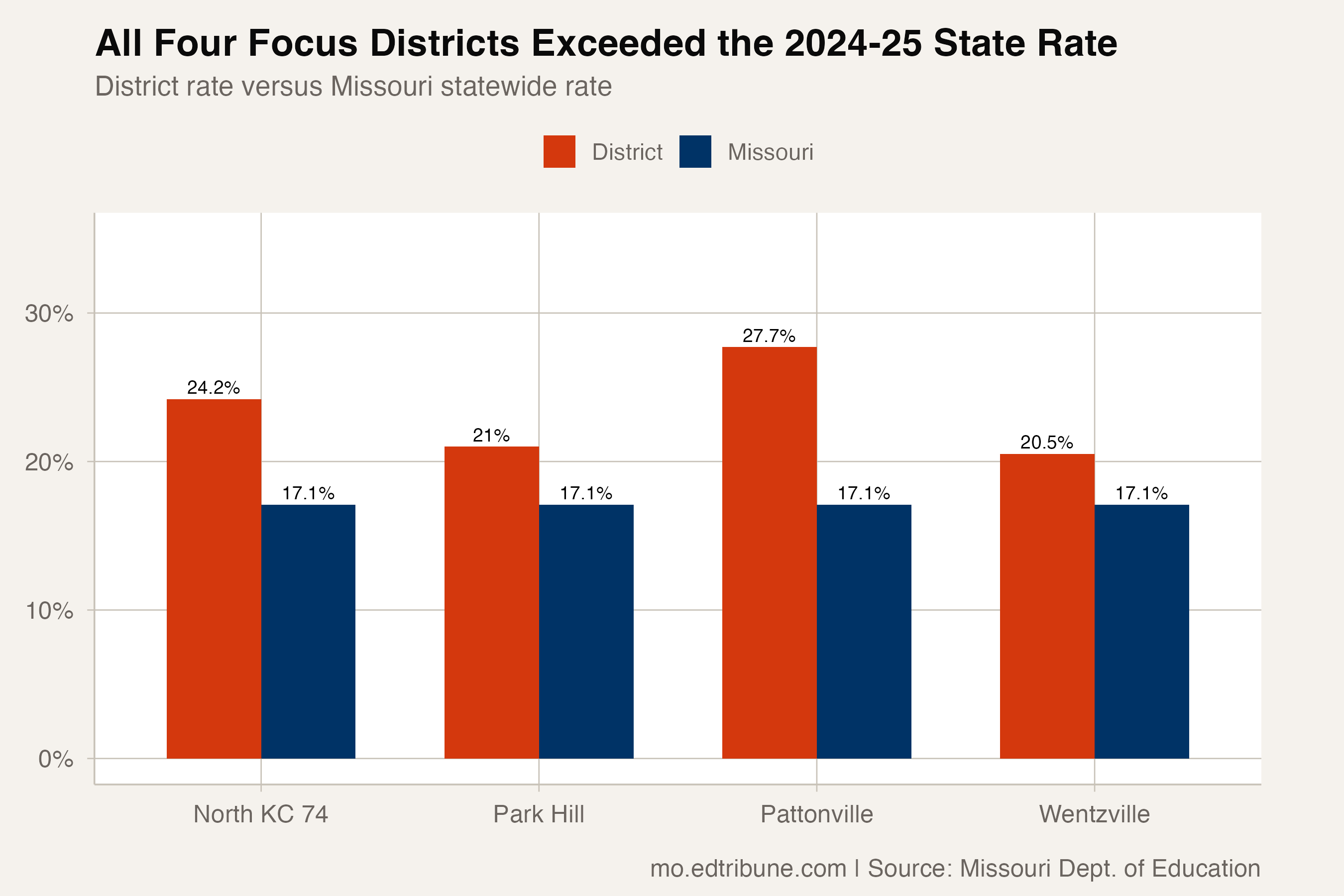
Four Missouri suburban districts remained above their 2018-19 chronic-absence rates in 2024-25; North Kansas City 74 and Pattonville also worsened over the latest two-year comparison.
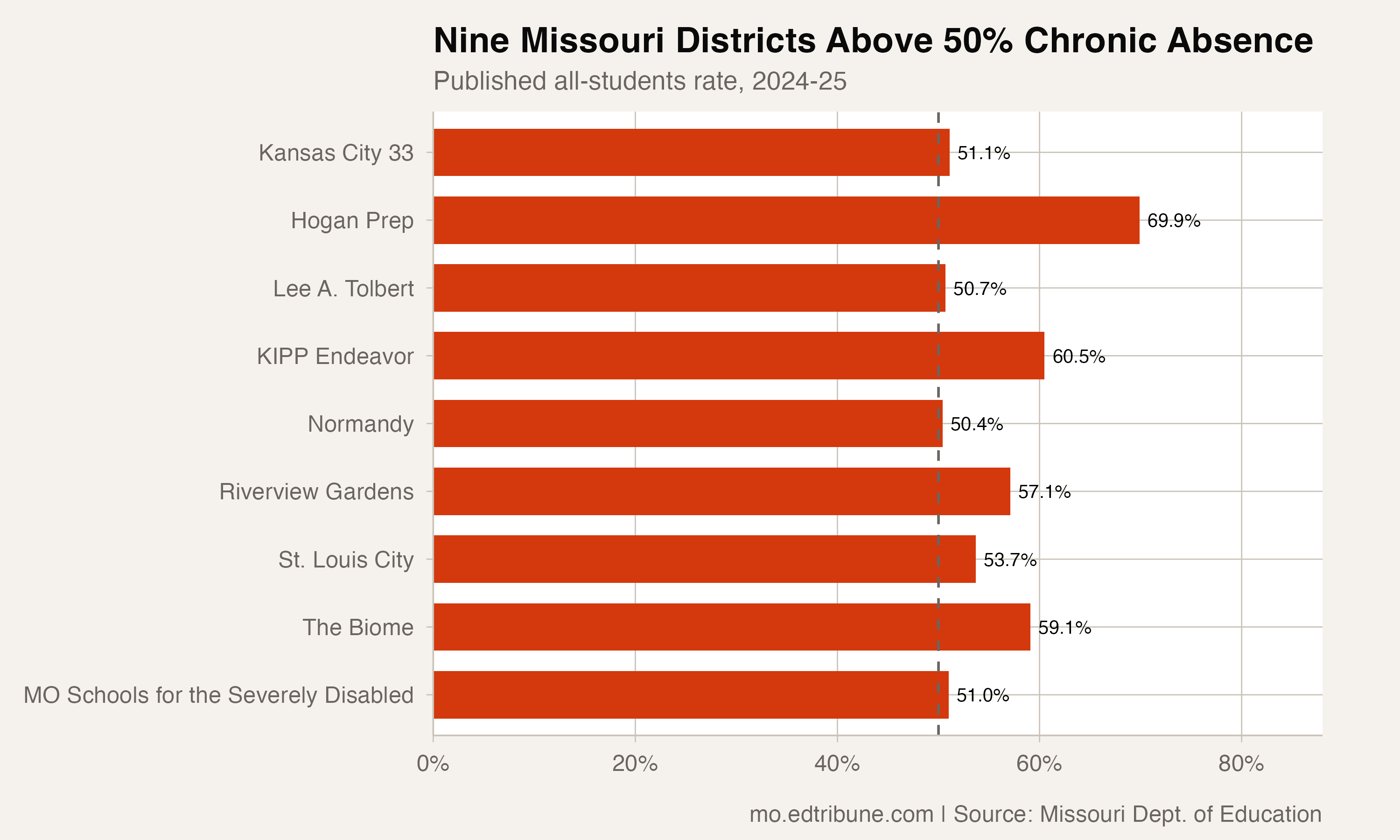
Eleven of 557 Missouri districts had chronic absenteeism at or above 50% in 2024-25, ranging from 50.4% in Normandy to 70.1% at Kairos Academies.
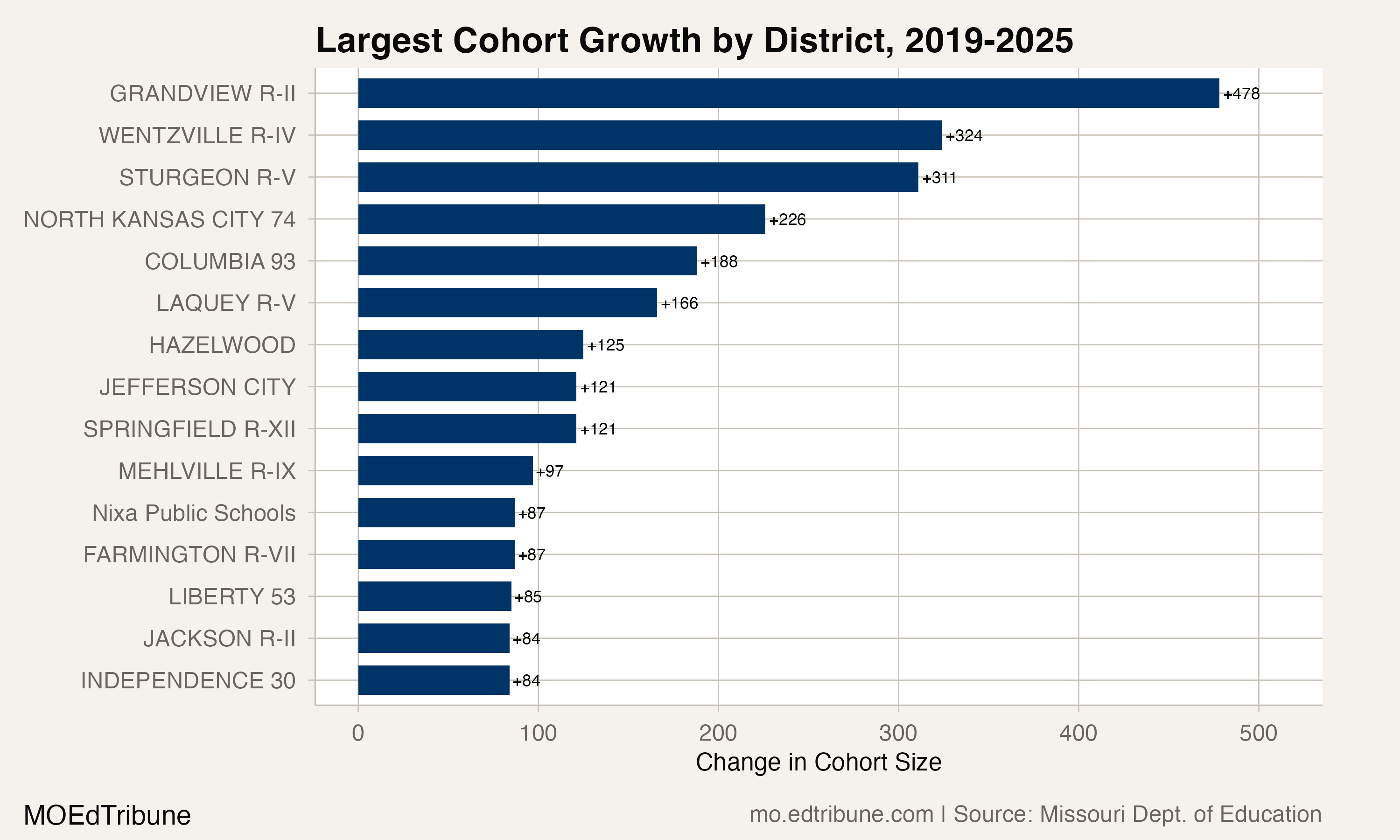
Grandview R-II posted the largest graduation-cohort gain among Missouri districts with published counts in both years.
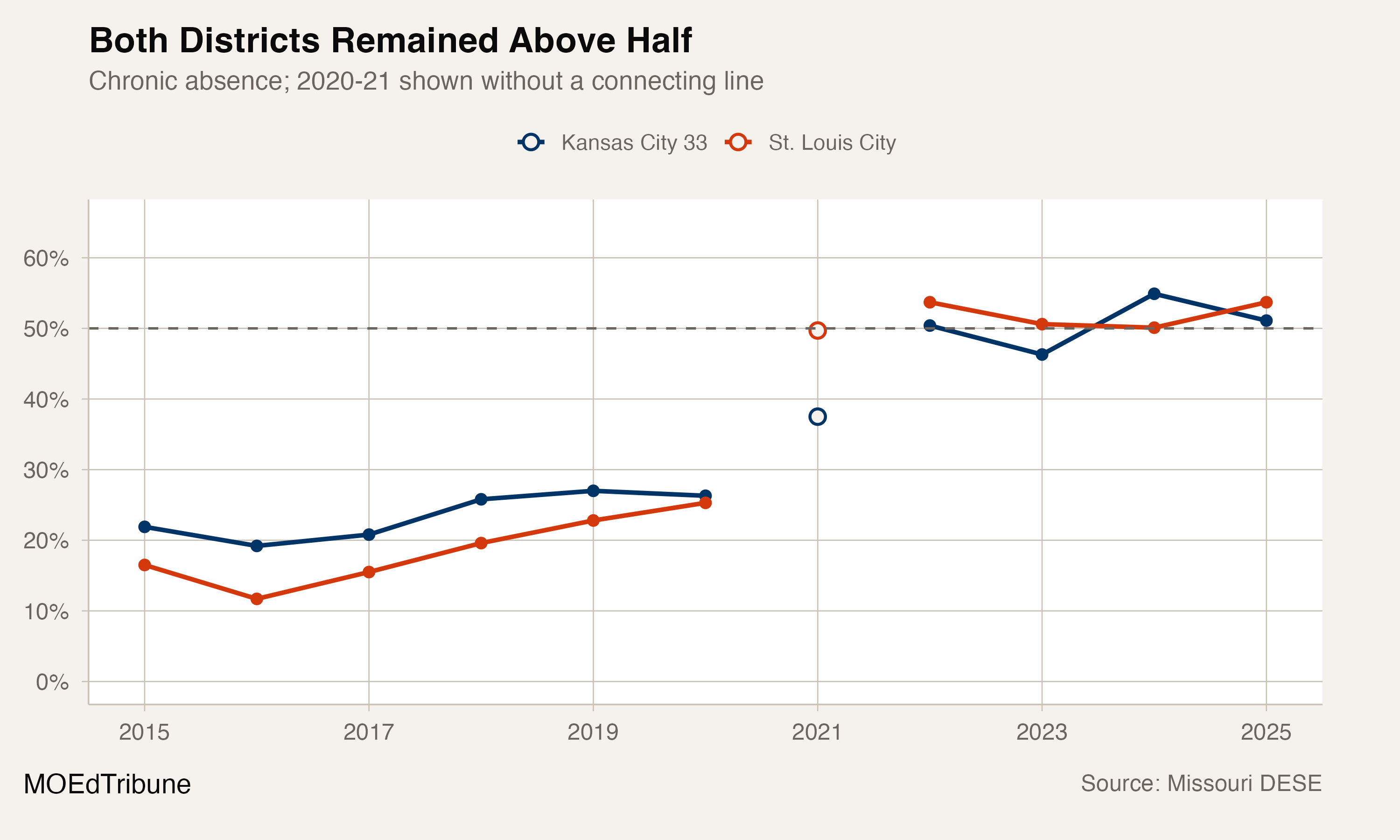
St. Louis City and Kansas City 33 each reported chronic-absence rates above 50% for a second consecutive year in 2024-25.
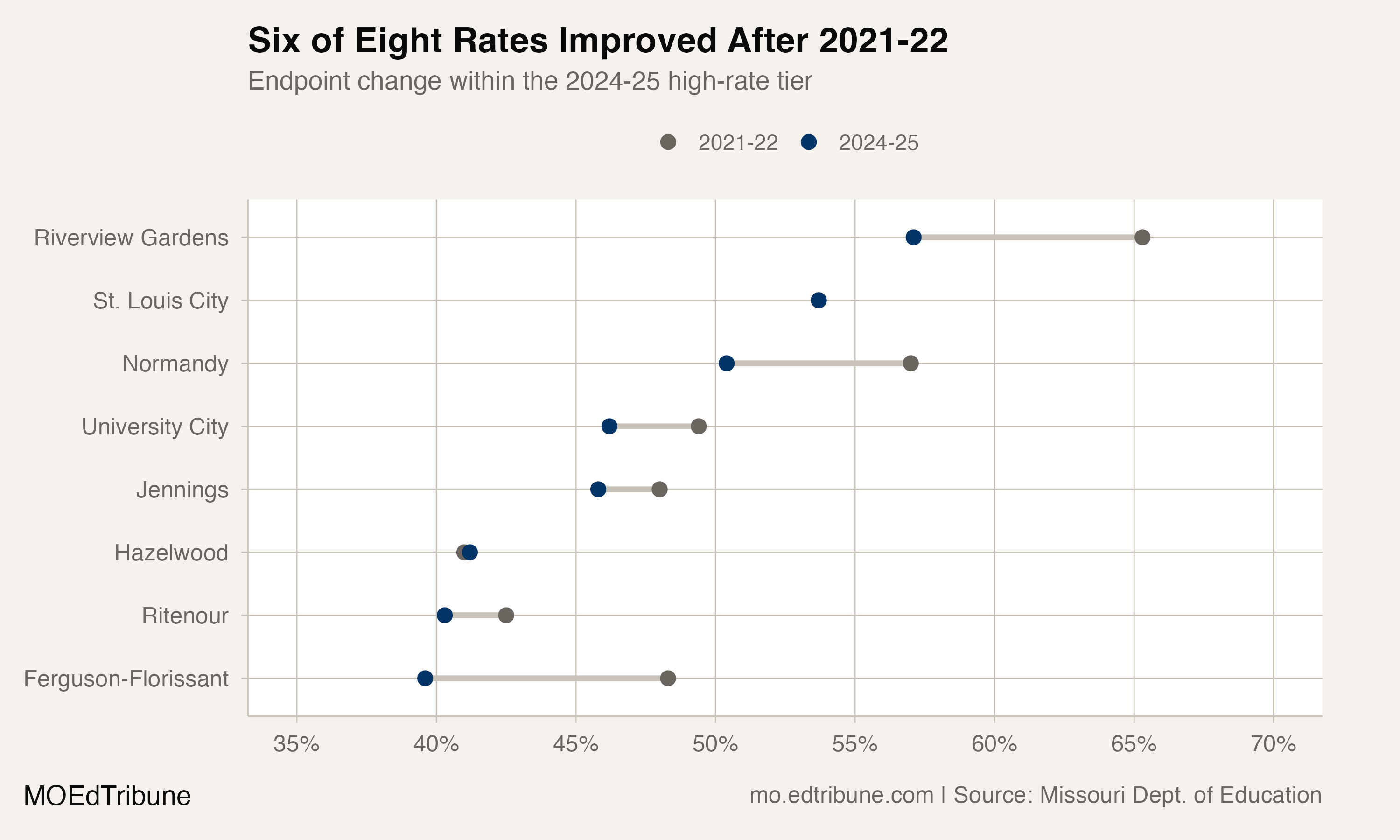
Six high-absence St. Louis-area districts improved after 2021-22, but eight still reported rates from 39.6% to 57.1% in 2024-25.
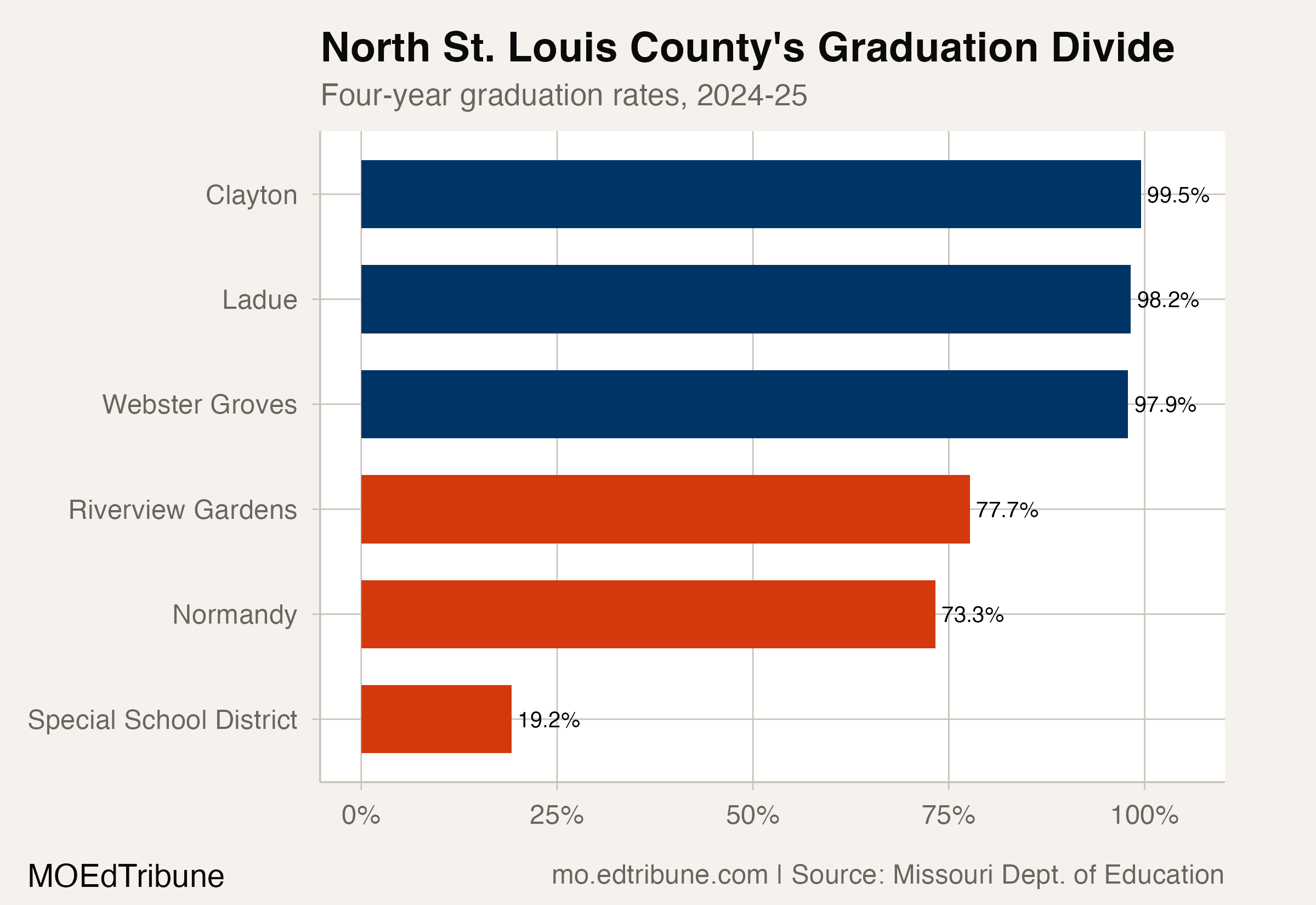
Normandy graduated 73.3 percent of its 2025 cohort on time, 26.2 percentage points below Clayton's rate.
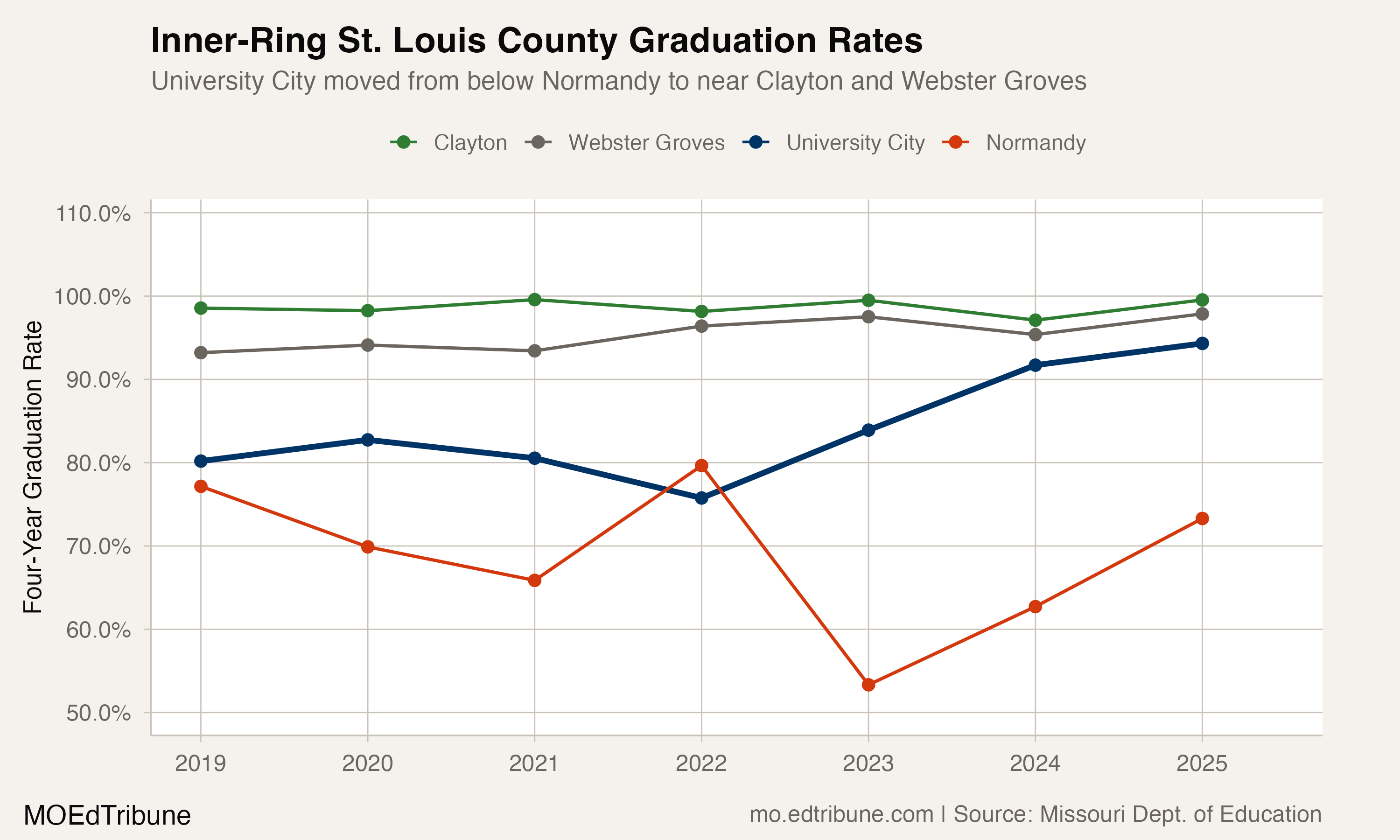
University City rose from a 75.8 percent graduation rate in 2022 to 94.3 percent in 2025, the largest gain among Missouri districts with 100+ students in both cohorts.
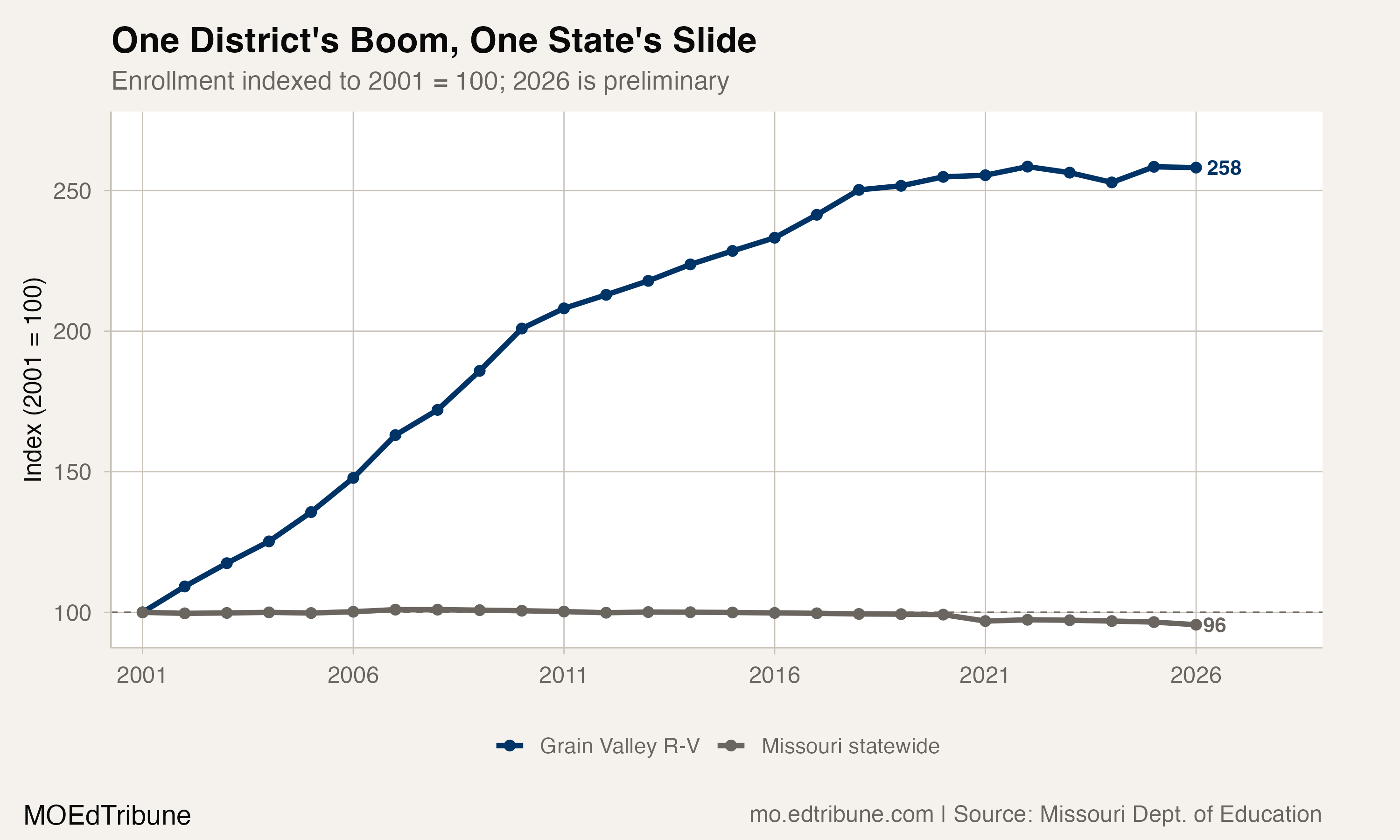
Grain Valley reported 4,461 K12 students in preliminary 2025-26, six below its observed peak. Its 21 consecutive annual gains were the longest in the complete-record comparison.
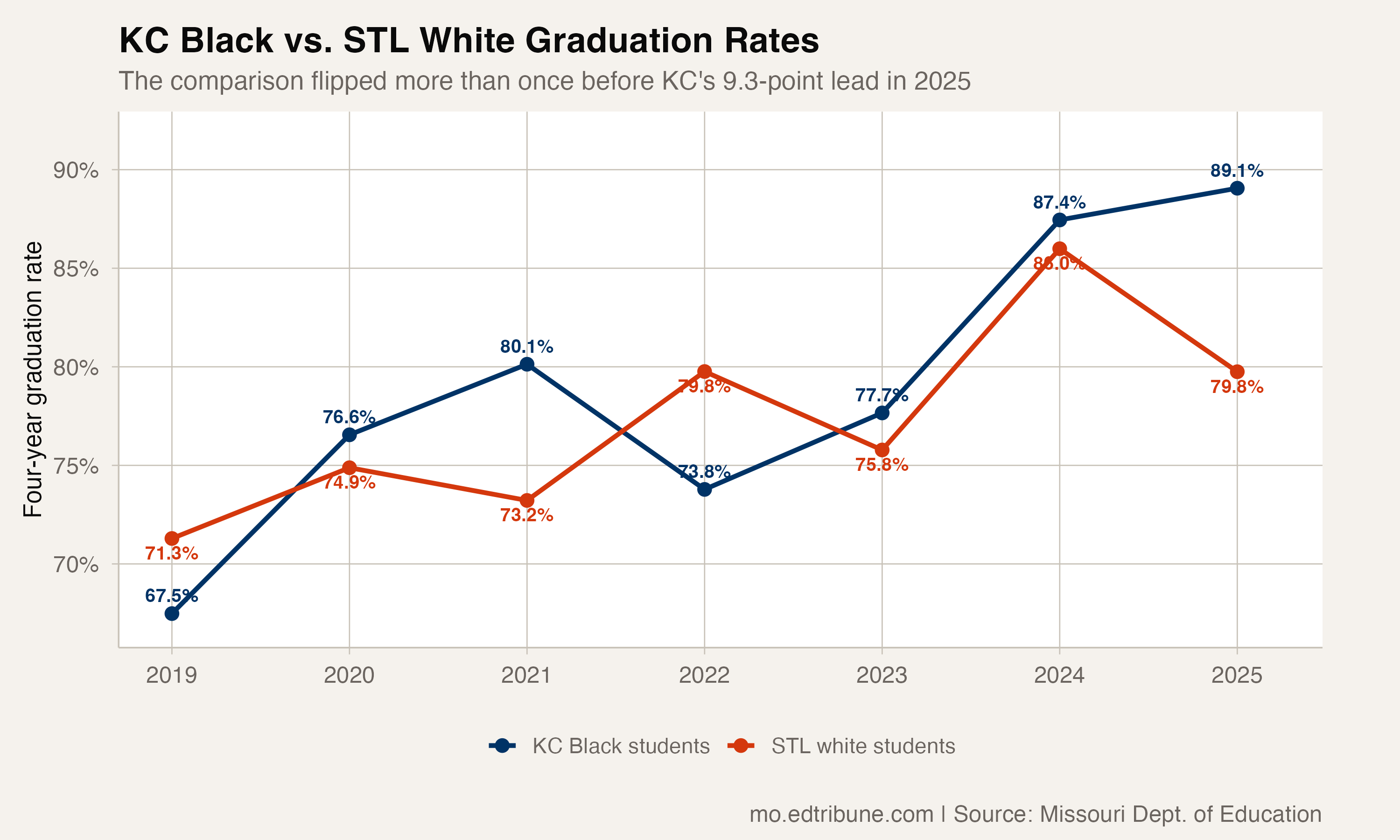
Black students in Kansas City 33 graduated at 89.1 percent in Missouri's 2025 four-year cohort, 9.3 points above white students in St. Louis City. The comparison favored St. Louis in 2019.