Absence
Missouri's FRL Chronic Absenteeism Gap Reached 8.6 Points in 2024-25
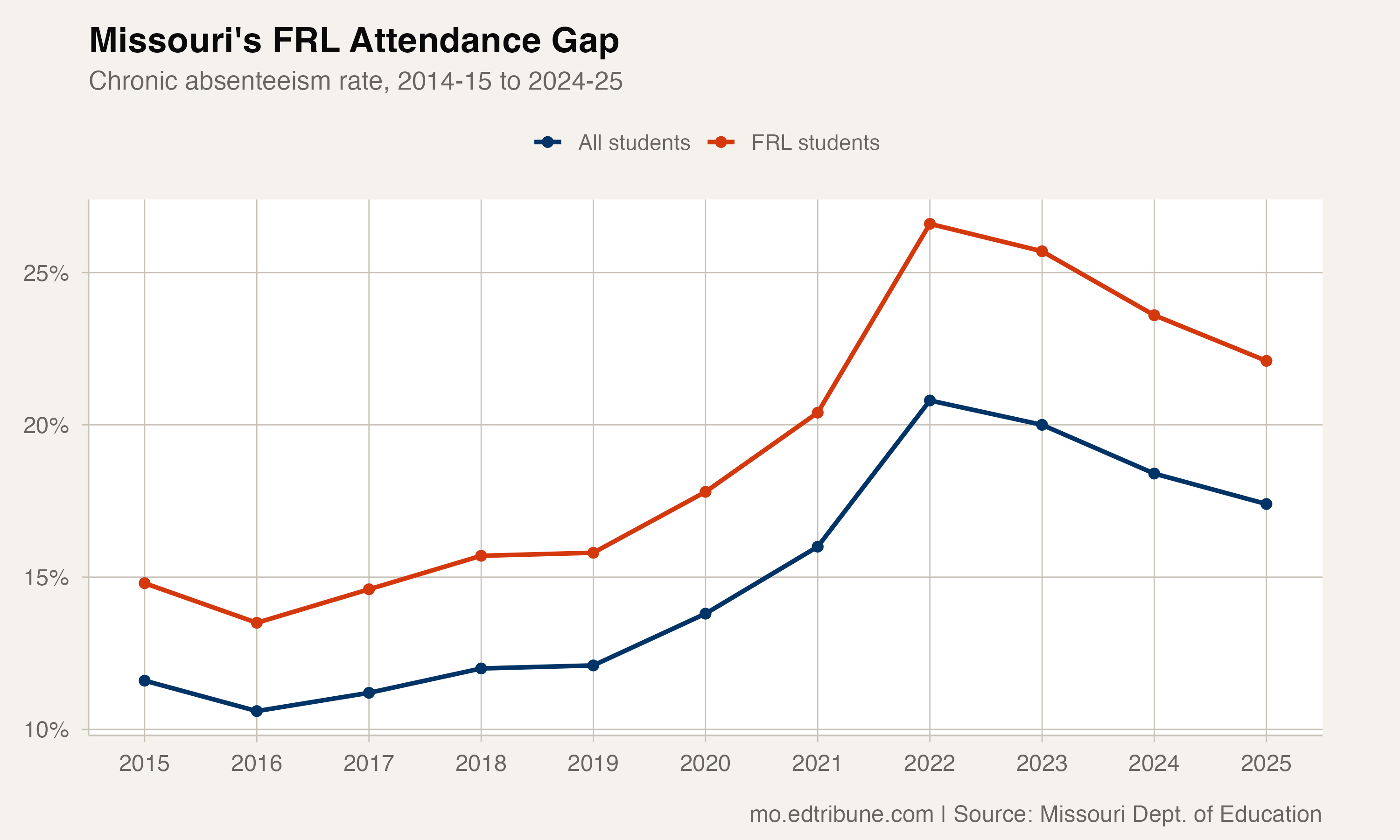
Missouri's FRL chronic absenteeism gap was 8.6 percentage points in 2024-25, up from 4.7 points in 2014-15, after a 10.4-point peak in 2021-22.
Show-Me State Education Coverage, Driven by Data
Education News & Data
Local education reporting from every corner of Missouri, grounded in Missouri Department of Education data.
Gordon Parks' chronic absence declined across three annual transitions. Named district examples show other endpoint improvements, with complete reported histories and explicit limits.
A complete attendance comparison finds sustained relative differences, but most qualifying district-level reports ended above their own earlier rates.
Missouri's 37 charter LEAs reported chronic absence rates from 0.0% to 70.1% in 2024-25, with a median of 41.3% against 15.2% for school districts.
St. Joseph's graduation rate fell from 83.0% to 77.0% across four annual declines, then rose 14.5 points in 2024 and reached 92.2% in 2025.
Missouri's FRL chronic absenteeism gap was 8.6 percentage points in 2024-25, up from 4.7 points in 2014-15, after a 10.4-point peak in 2021-22.
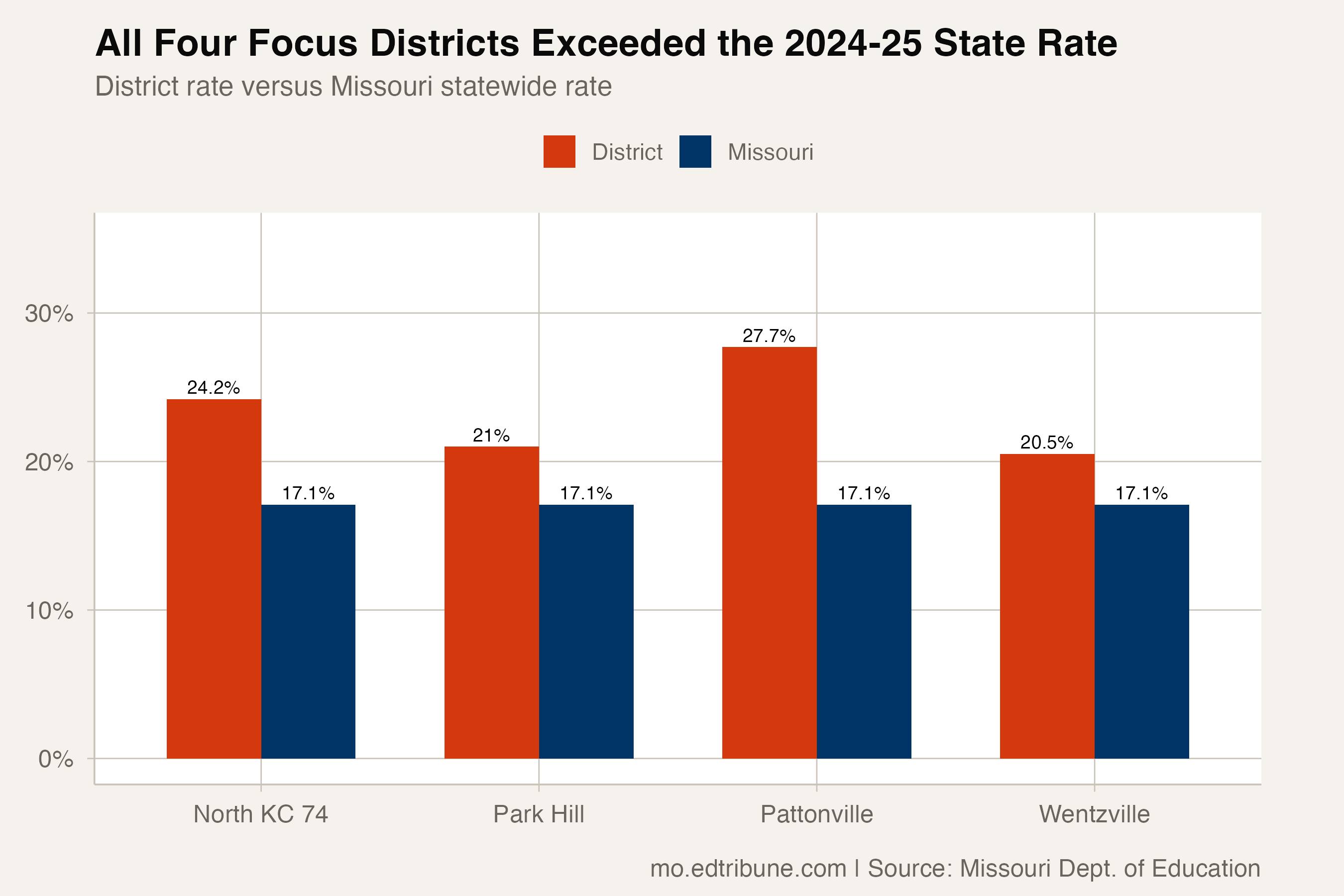
Four Missouri suburban districts remained above their 2018-19 chronic-absence rates in 2024-25; North Kansas City 74 and Pattonville also worsened over the latest two-year comparison.
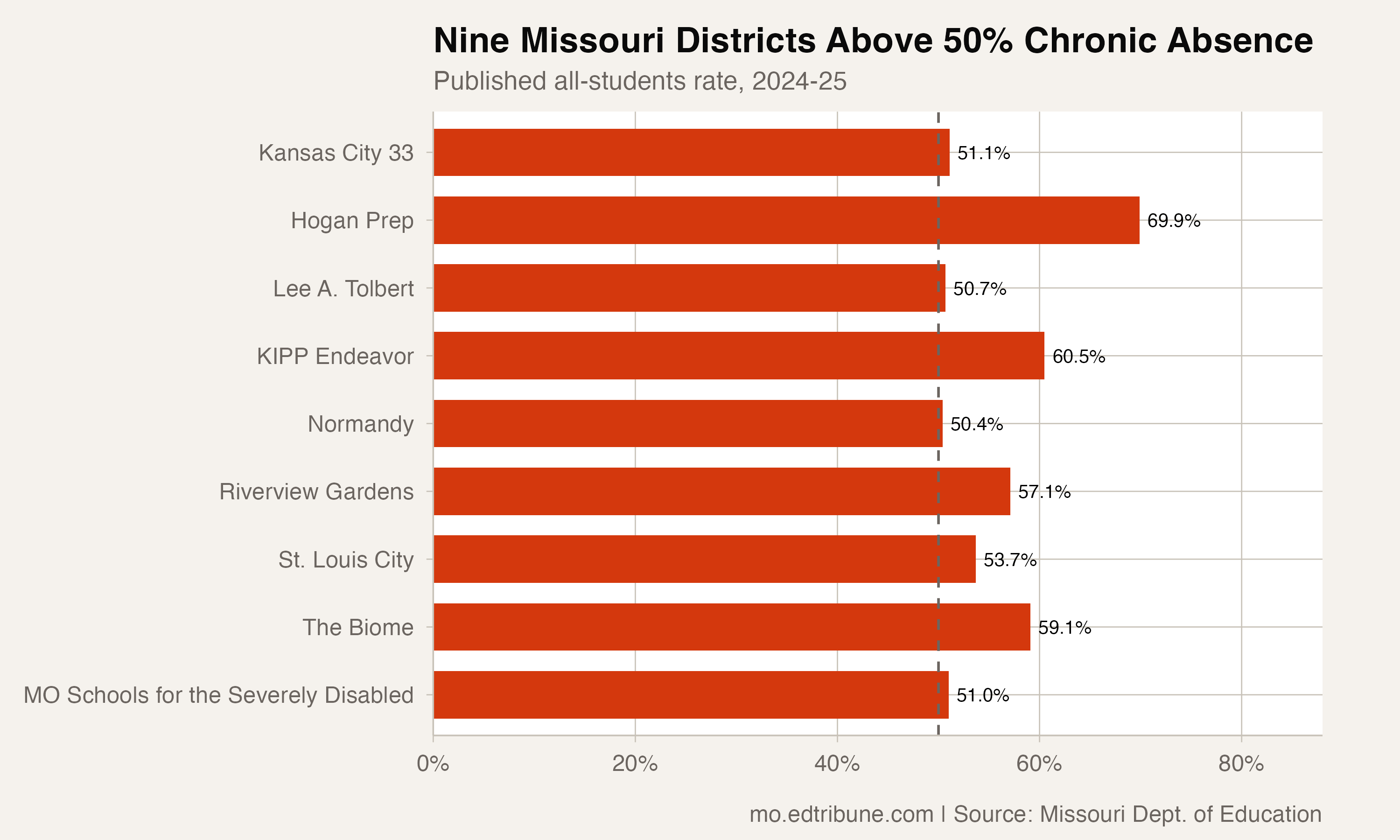
Eleven of 557 Missouri districts had chronic absenteeism at or above 50% in 2024-25, ranging from 50.4% in Normandy to 70.1% at Kairos Academies.
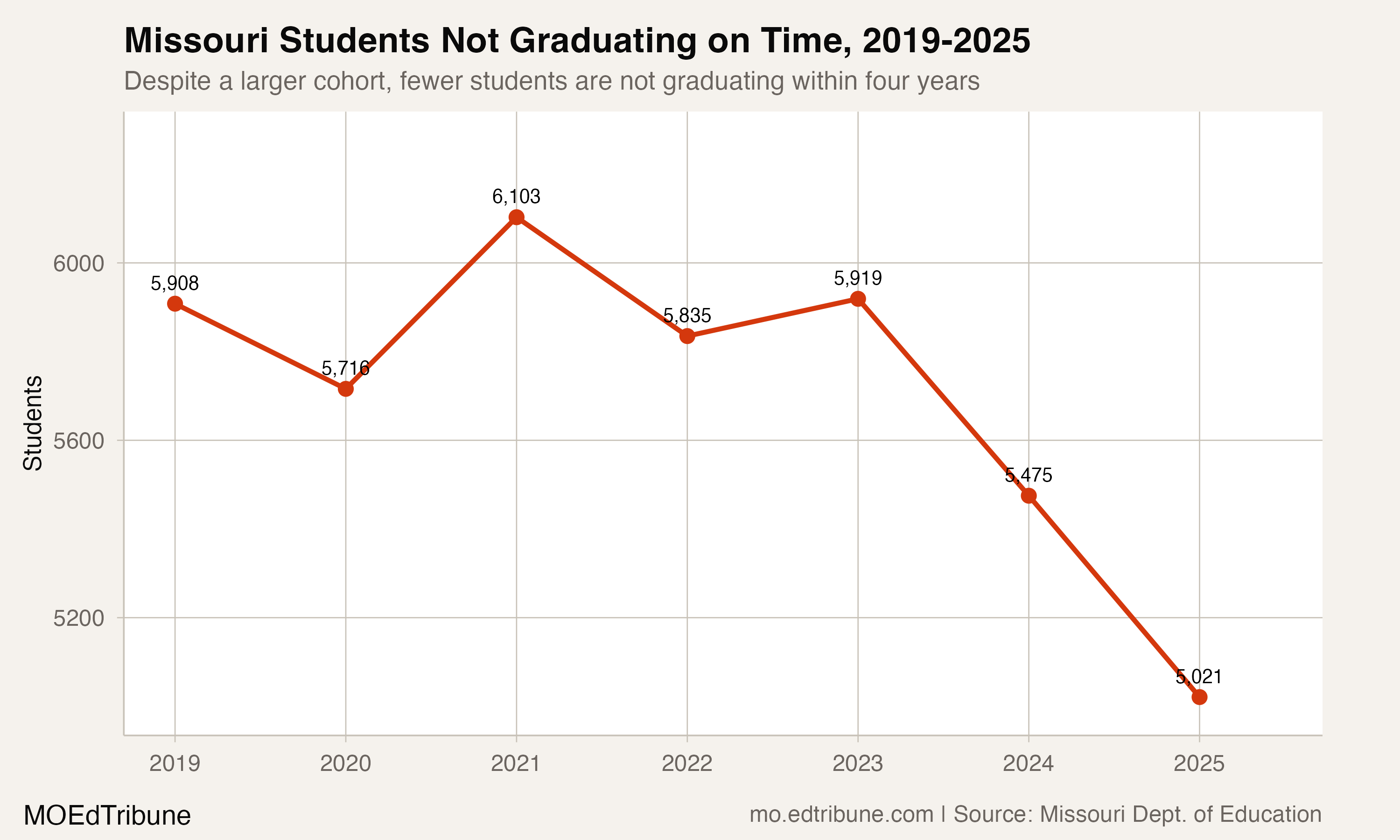
Missouri's graduating class grew by 3,048 students since 2019 while the graduation rate rose, producing nearly 4,000 additional on-time graduates per year.
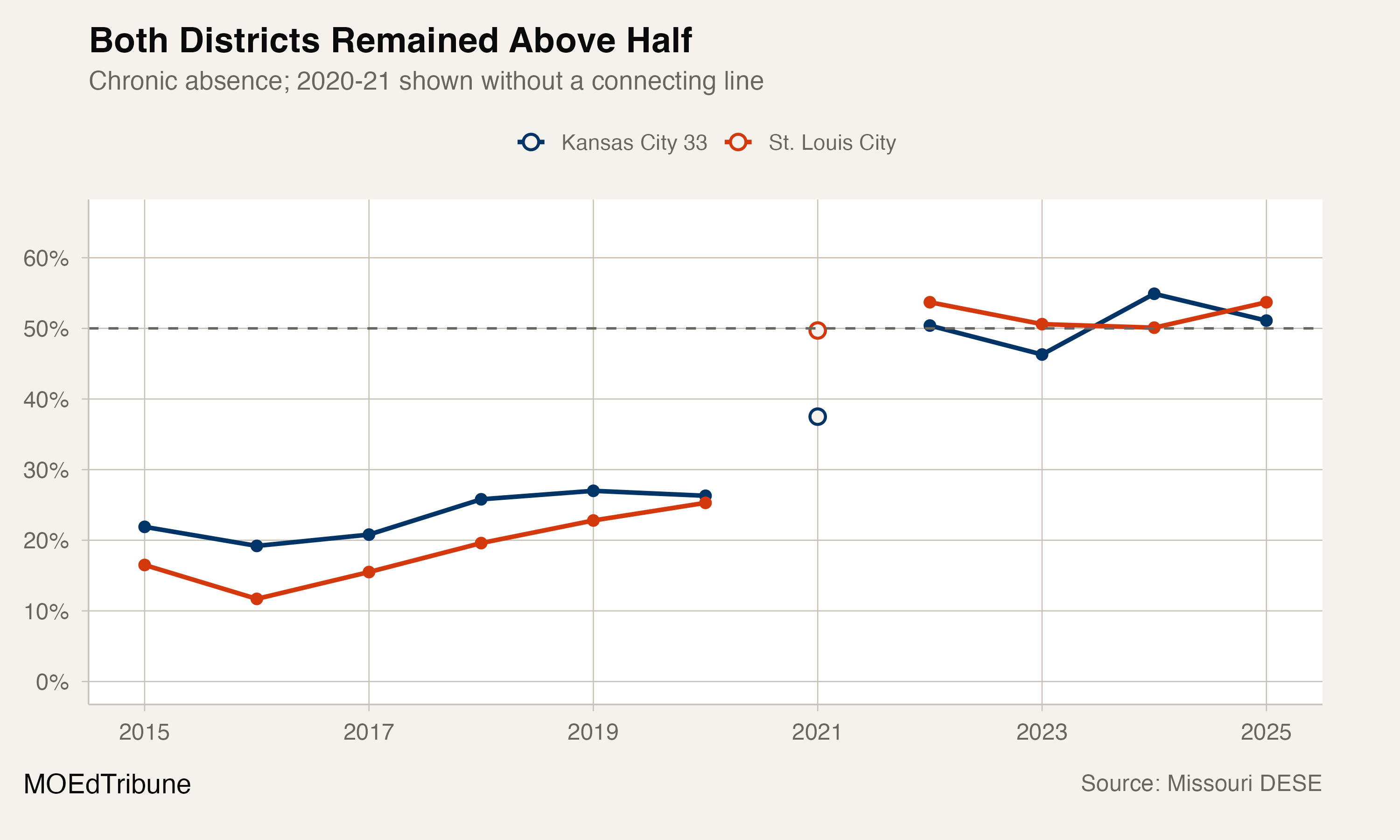
St. Louis City and Kansas City 33 each reported chronic-absence rates above 50% for a second consecutive year in 2024-25.
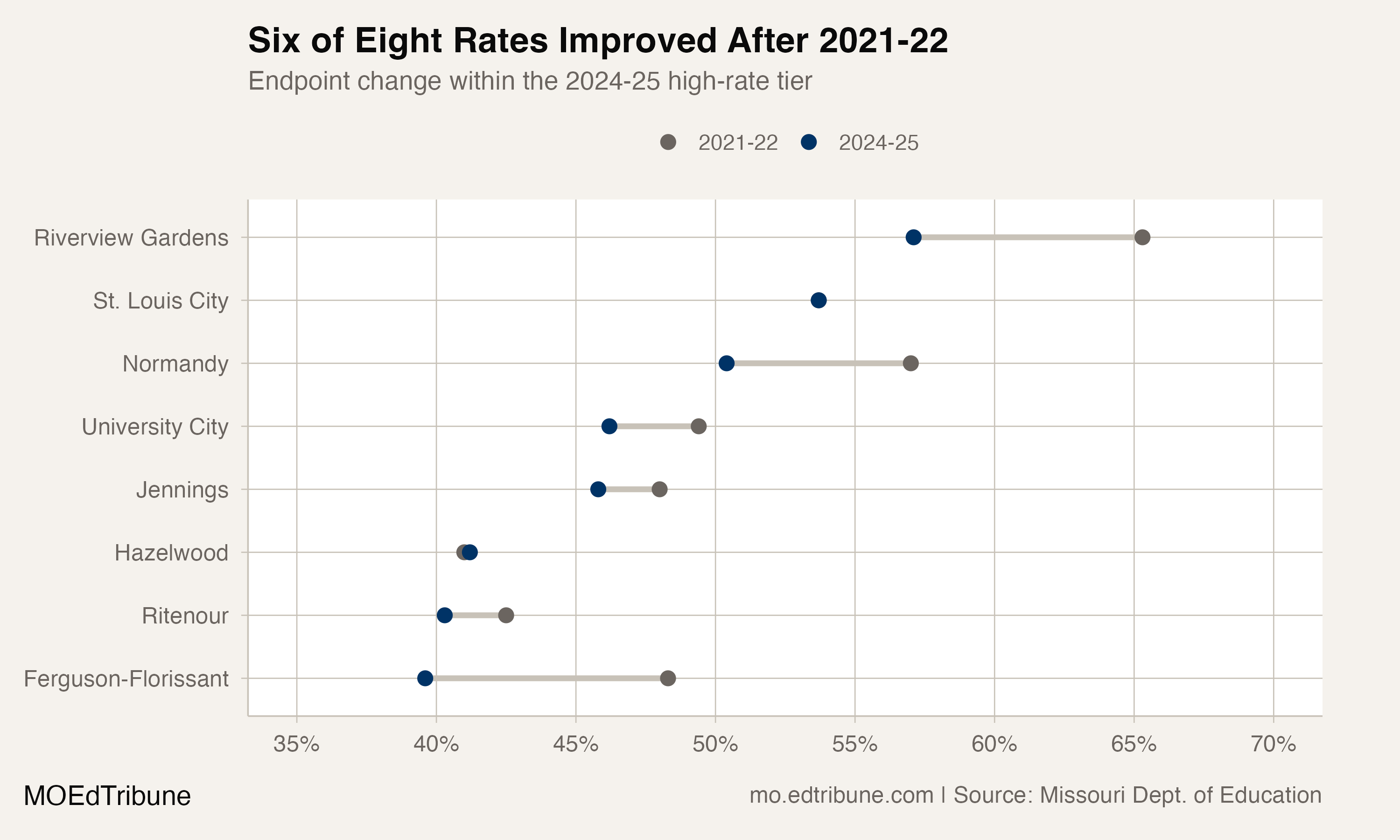
Six high-absence St. Louis-area districts improved after 2021-22, but eight still reported rates from 39.6% to 57.1% in 2024-25.
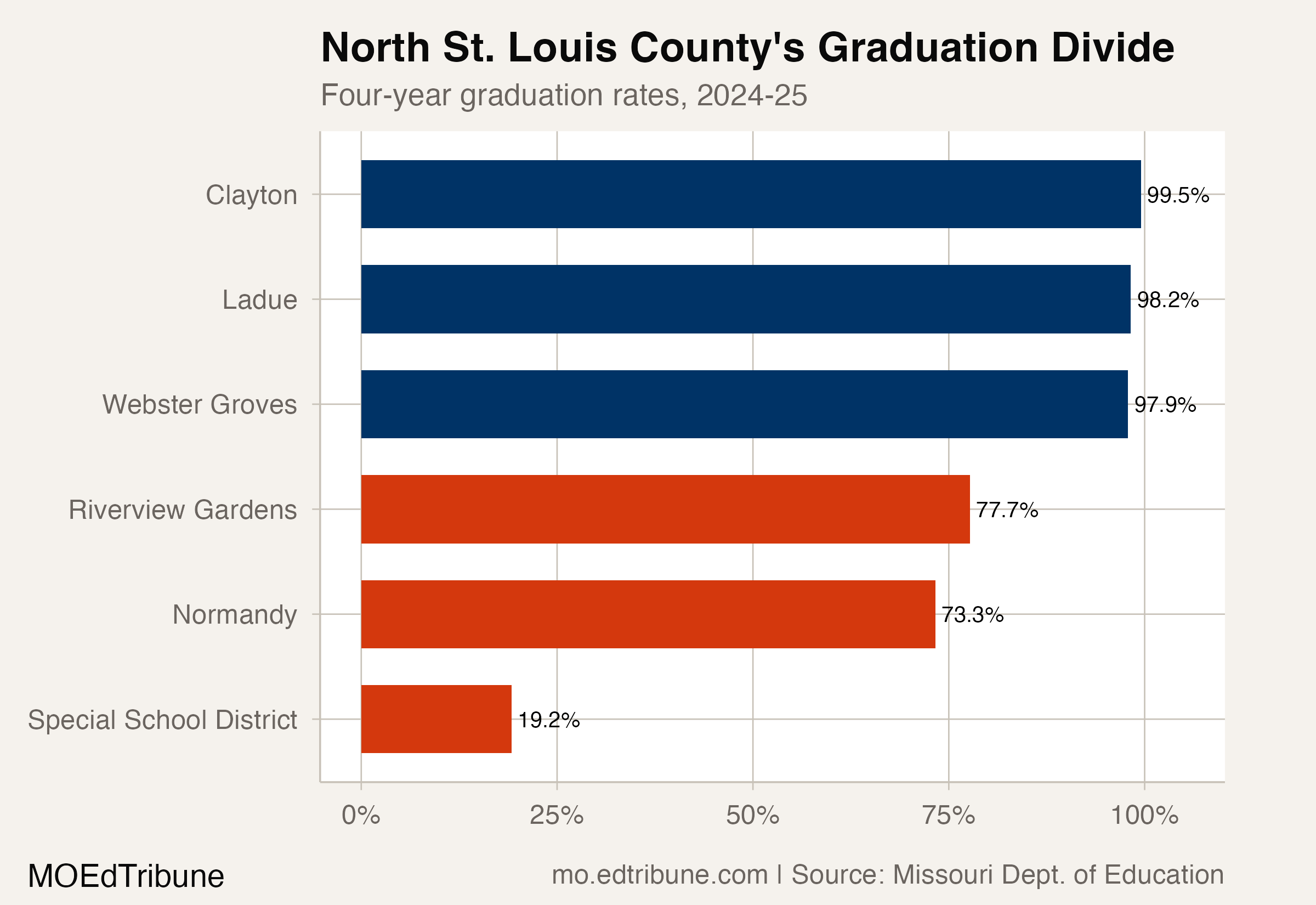
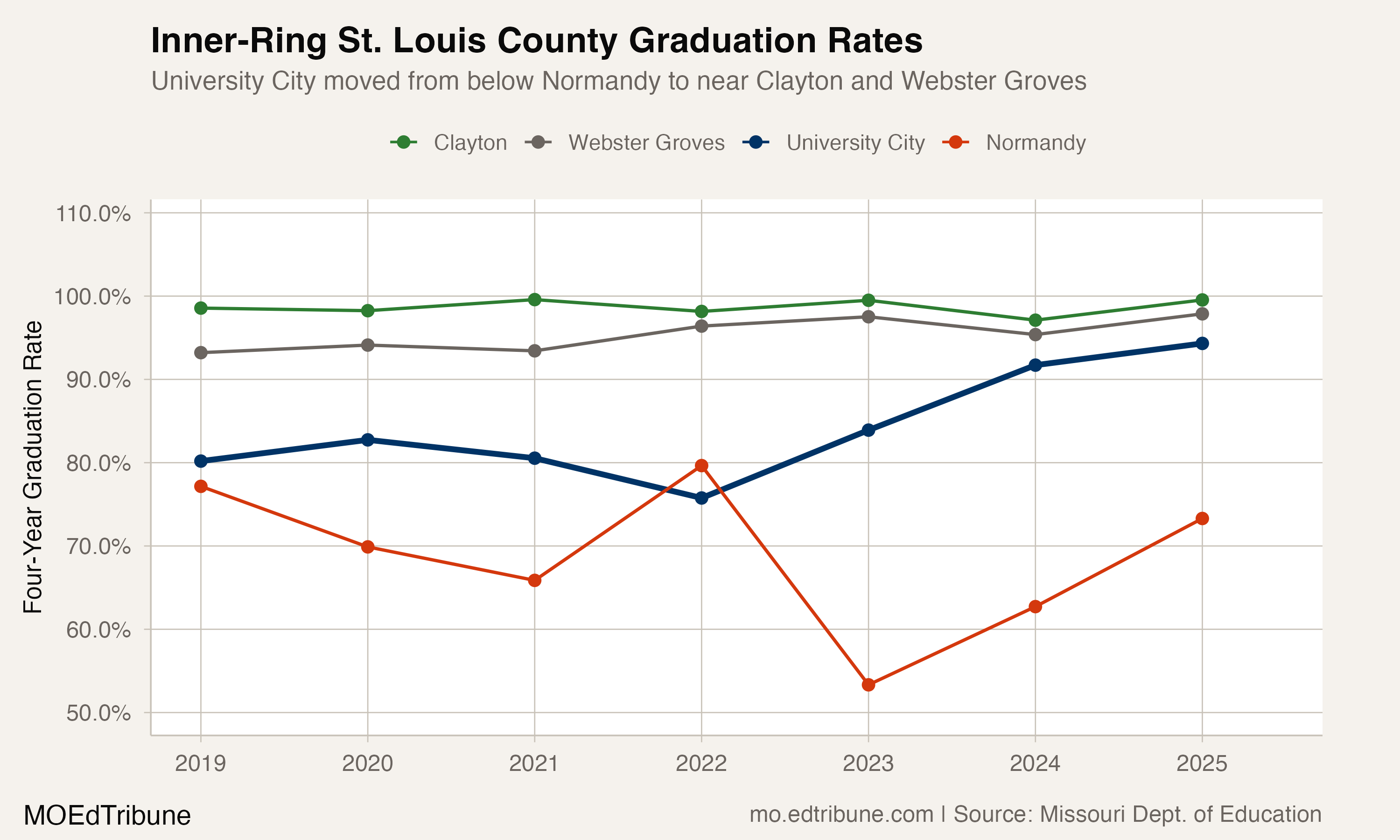
Normandy graduated 73.3 percent of its 2025 cohort on time, 26.2 percentage points below Clayton's rate.
University City rose from a 75.8 percent graduation rate in 2022 to 94.3 percent in 2025, the largest gain among Missouri districts with 100+ students in both cohorts.
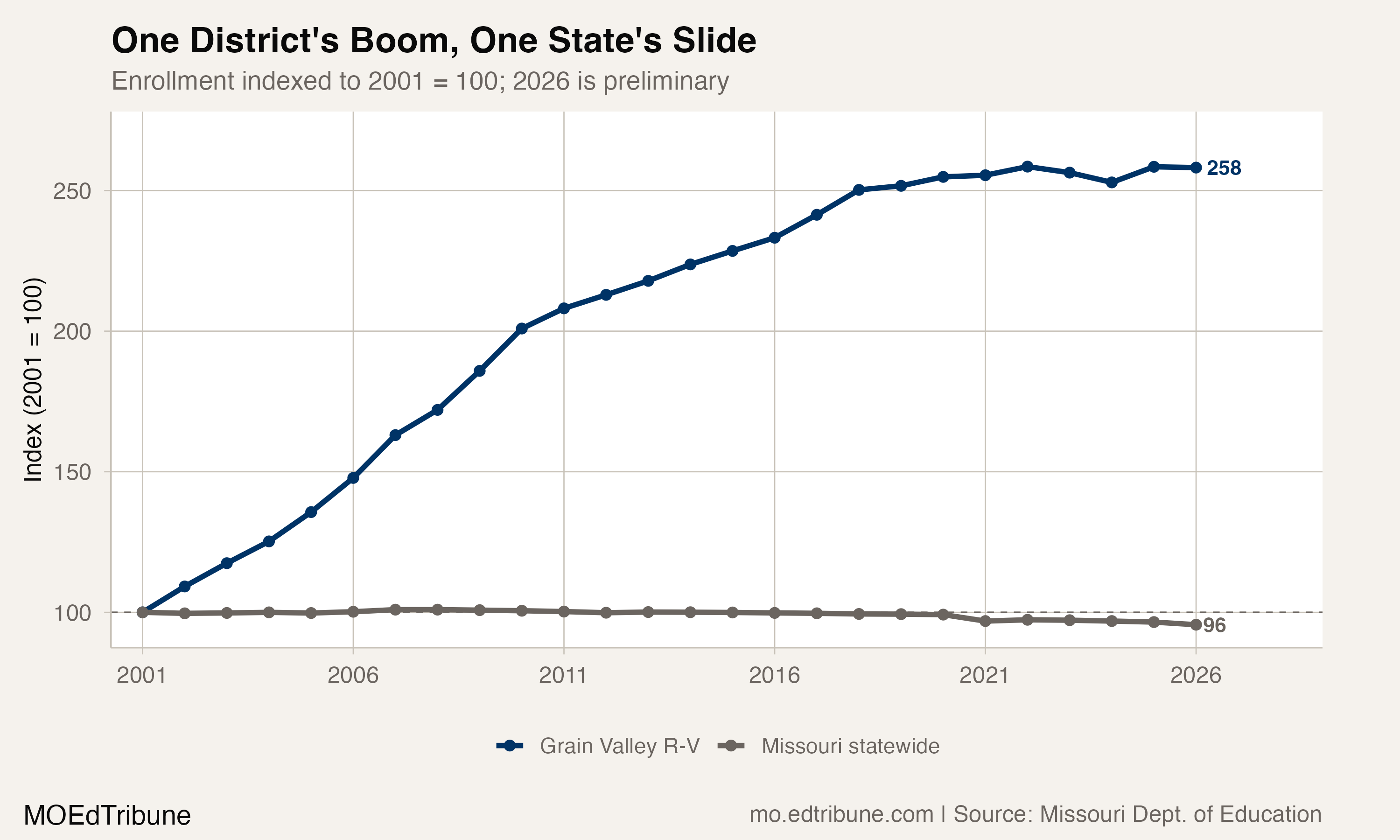
Grain Valley reported 4,461 K12 students in preliminary 2025-26, six below its observed peak. Its 21 consecutive annual gains were the longest in the complete-record comparison.
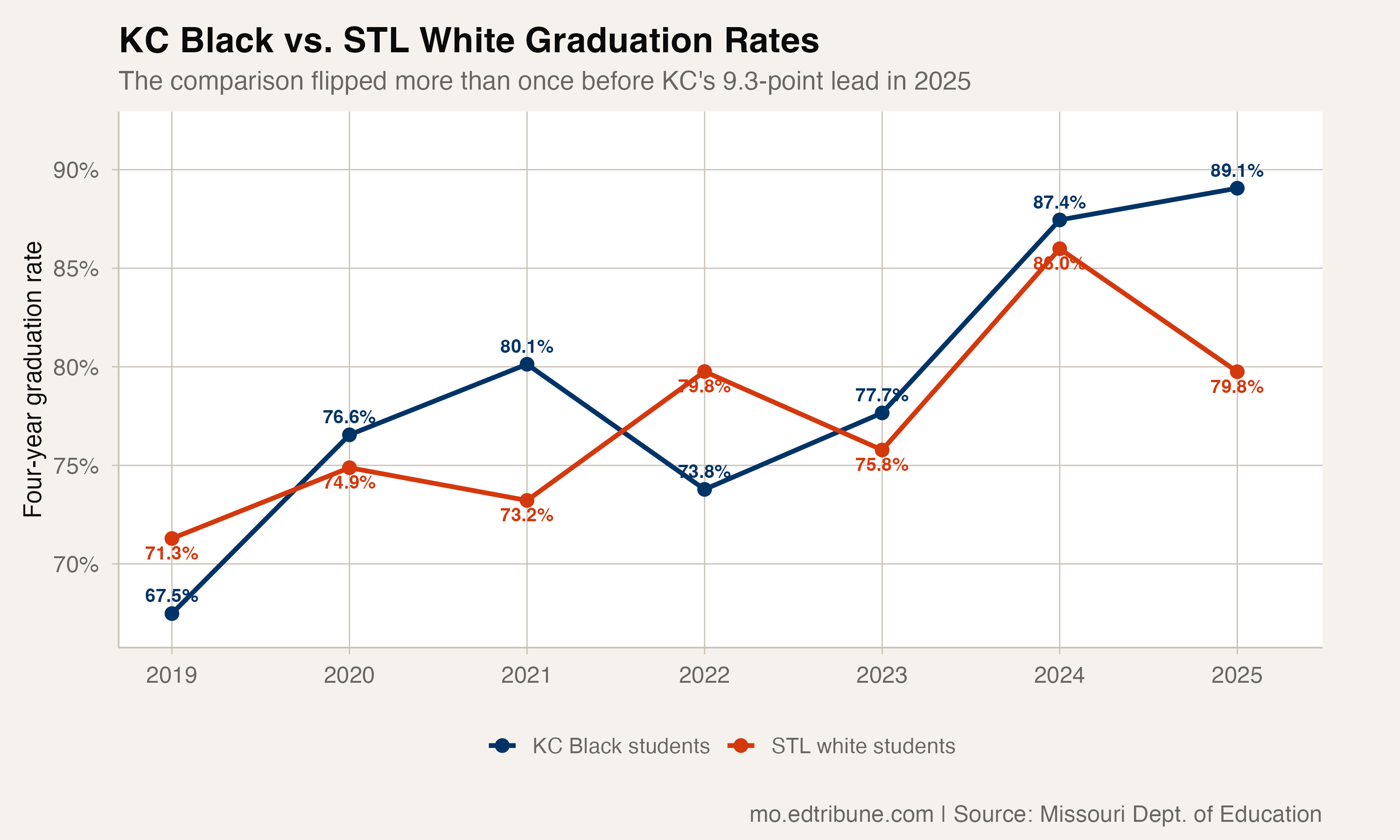
Black students in Kansas City 33 graduated at 89.1 percent in Missouri's 2025 four-year cohort, 9.3 points above white students in St. Louis City. The comparison favored St. Louis in 2019.
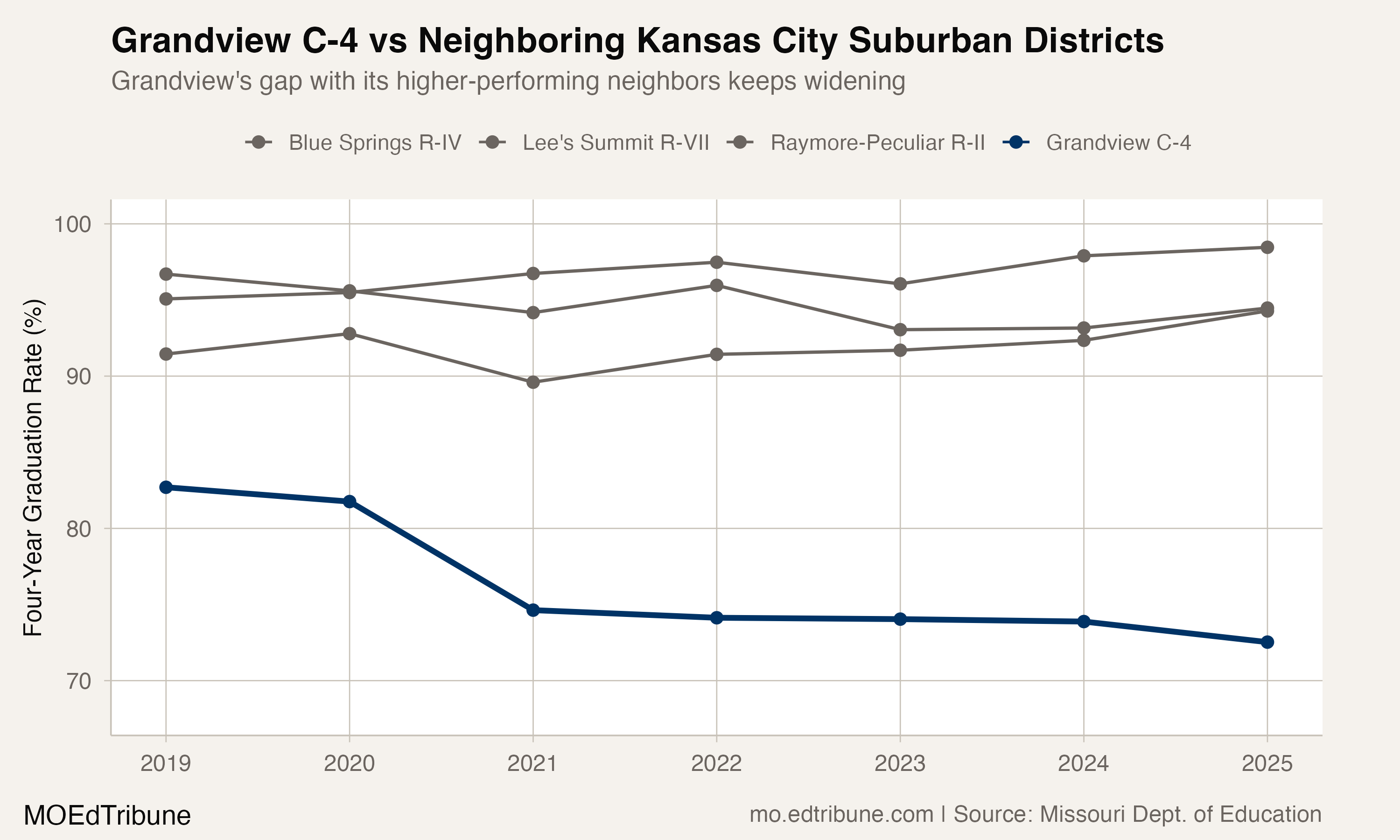
Grandview C-4 recorded six consecutive declines in the available four-year graduation-rate data, from 82.7% in 2018-19 to 72.5% in 2024-25.