Correction (October 8, 2026): An earlier version treated the difference between same-year four- and five-year graduation rates as the effect of giving the same students an extra year. It also estimated roughly 1,350 fifth-year completers from that difference. Those rates describe different adjusted cohorts, so that calculation and the conclusions about completion speed were unsupported. The published graduation rates and their percentage-point differences remain unchanged.
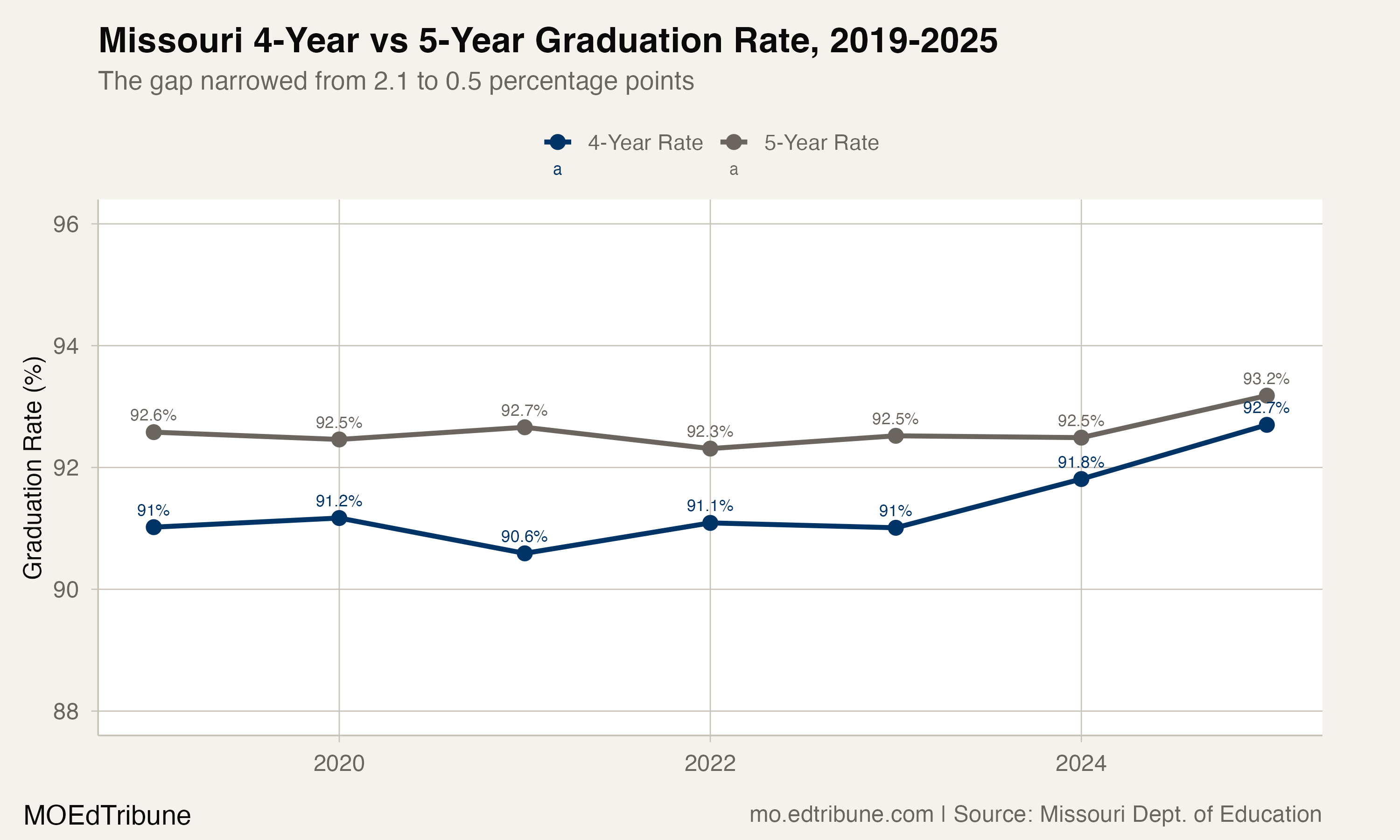
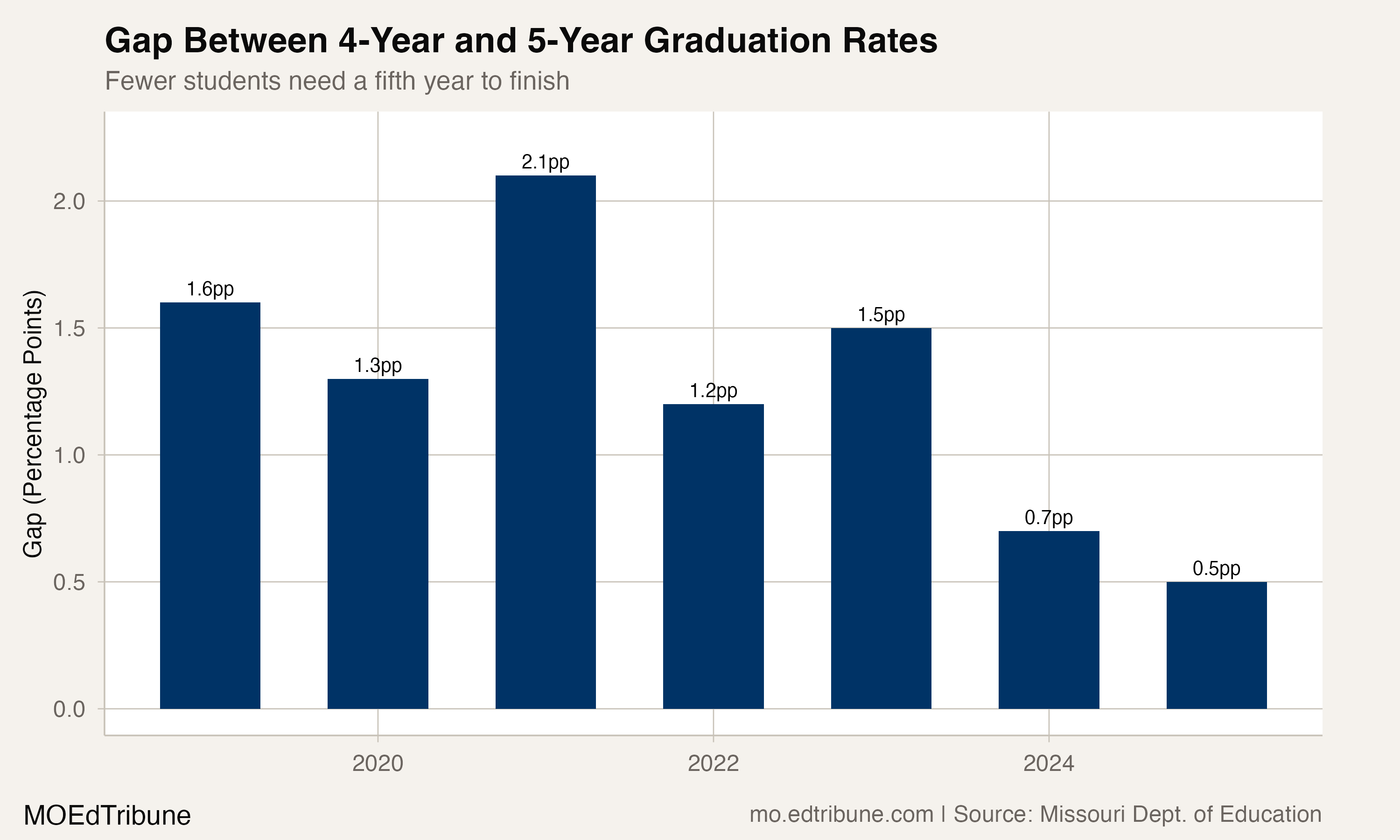
Missouri’s published four- and five-year graduation rates moved closer between 2020-21 and 2024-25. Their difference fell from 2.1 percentage points to 0.5 points. That is a change in reported rates, rather than a count of students who needed an extra year.
In 2020-21, the four-year rate was 90.6% and the five-year rate was 92.7%. In 2024-25, the rates were 92.7% and 93.2%, respectively. The four-year rate rose more between those endpoints, narrowing the difference.
A comparison of rates, rather than individual outcomes
Missouri’s graduation-rate guide defines each rate by the time since its students first entered high school. The four-year and five-year records for a given reporting year do not have the same cohort denominator. Subtracting the percentages cannot establish how many members of one entering class finished during an additional year.
The smaller difference therefore does not show that fewer students need extra time, that students are finishing faster, or that districts shifted students between completion tracks. Those questions require a comparison that follows the same cohort across time.
The published cohort rates
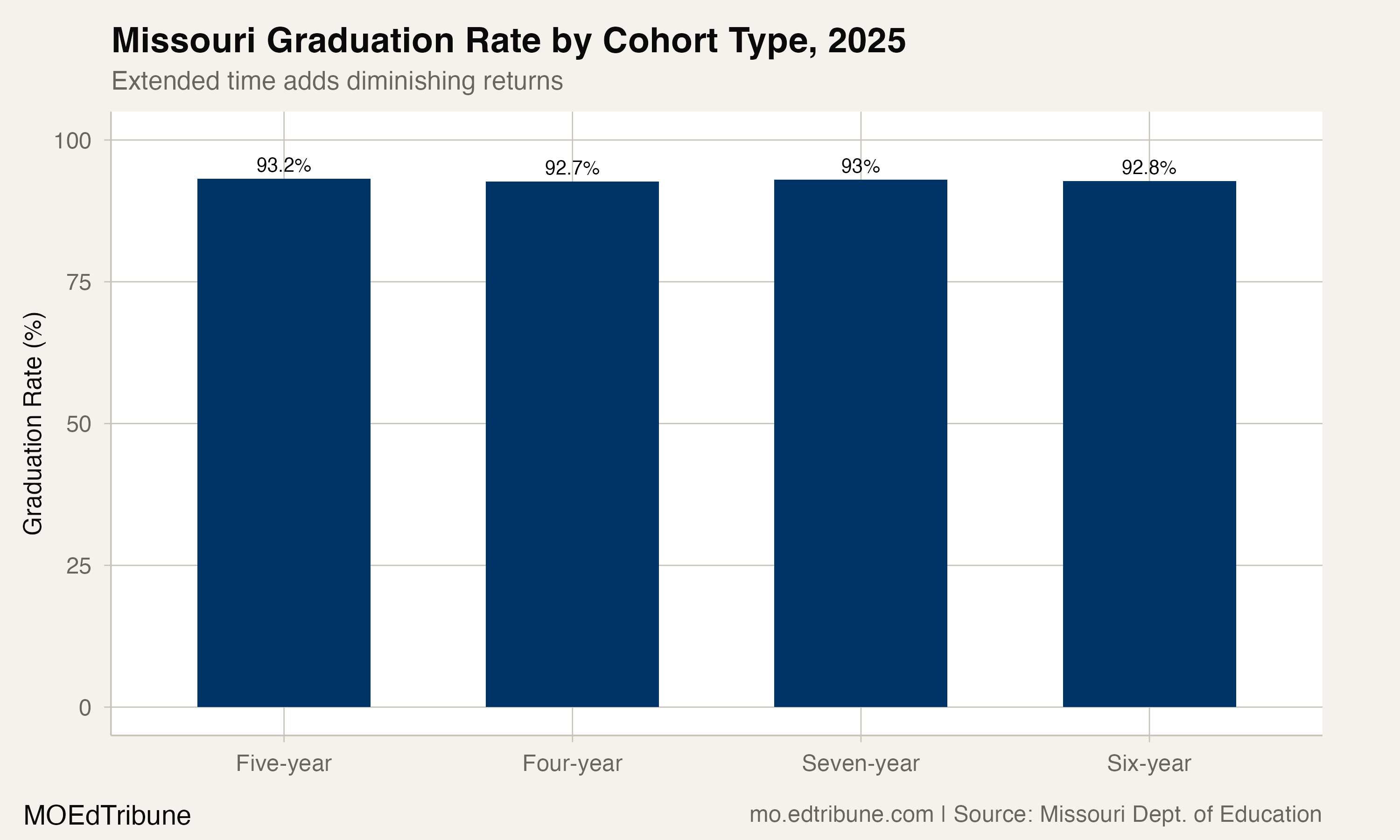
For 2024-25, Missouri reported:
- Four-year: 92.7%
- Five-year: 93.2%
- Six-year: 92.8%
- Seven-year: 93.0%
These rates describe different adjusted cohorts. Their similar values do not measure the added benefit of another year for the same students. They also cannot establish that students who miss the four-year window are unlikely to graduate later.
What the figures establish
The published rate difference was smaller at the end of this comparison than in 2020-21. The four-year rate also increased between those endpoints. The records establish those results; this comparison does not identify what caused them or how an individual student’s completion time changed.
The figures come from the Missouri Department of Elementary and Secondary Education’s school data, using its published statewide adjusted-cohort graduation records.
Detailed code that reproduces the analysis and figures in this article is available exclusively to EdTribune subscribers.
Discussion
Sign in to join the discussion.
Loading comments...