Nearly Four in Ten Missouri Districts Hit All-Time High Graduation Rates
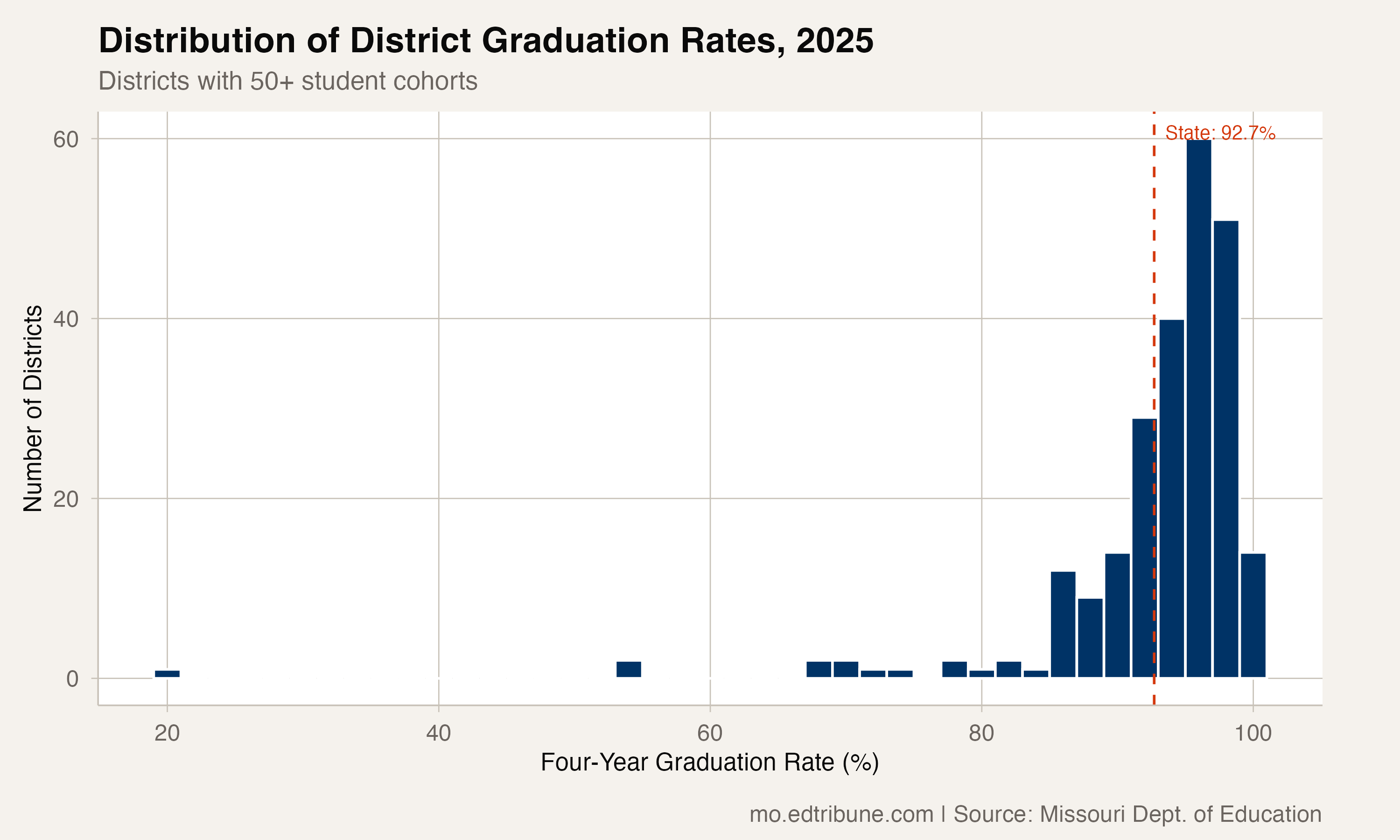
179 of Missouri's 455 districts posted their highest-ever graduation rate in 2025, including 13 that hit 100 percent with meaningful cohort sizes.
Show-Me State Education Coverage, Driven by Data
Page 2 of 2
179 of Missouri's 455 districts posted their highest-ever graduation rate in 2025, including 13 that hit 100 percent with meaningful cohort sizes.
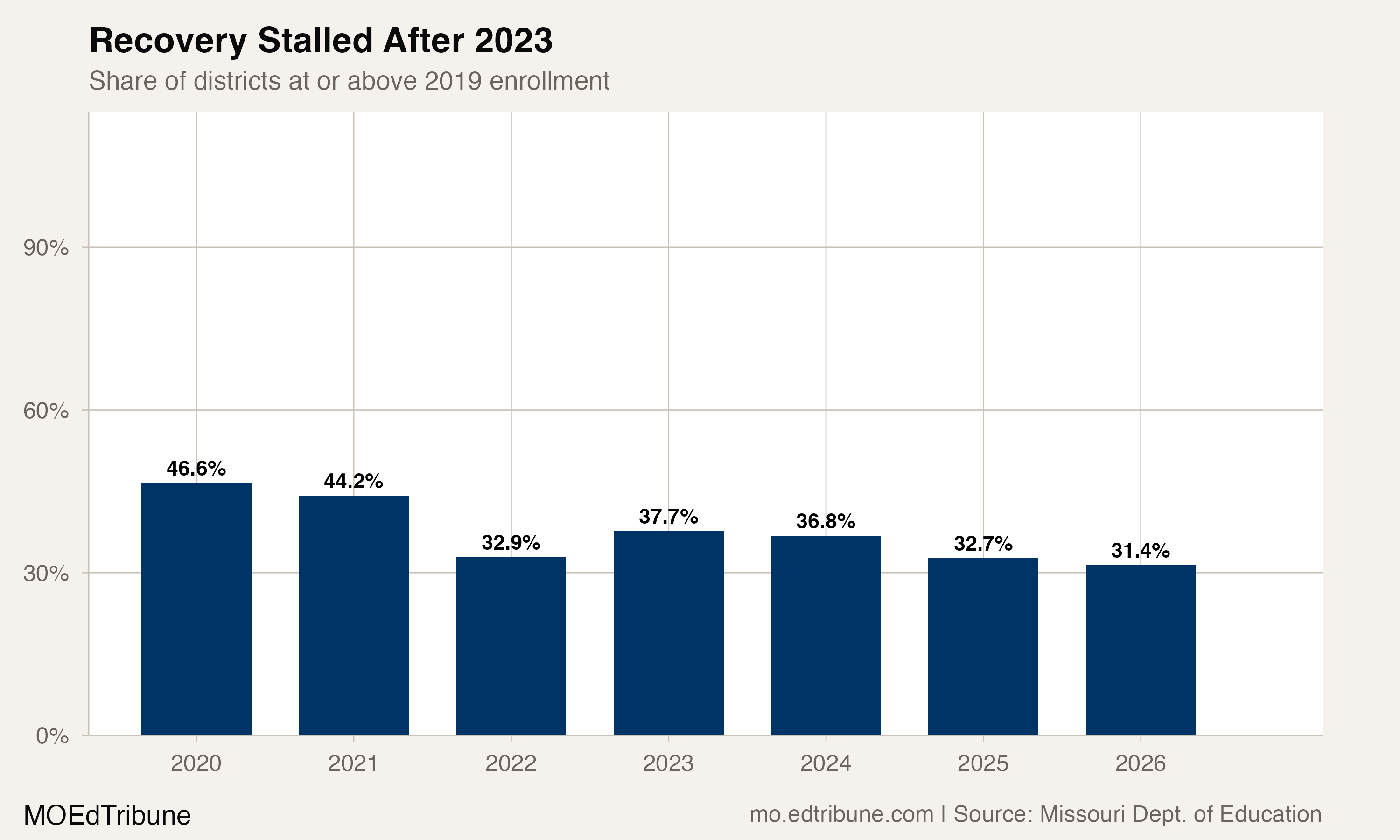
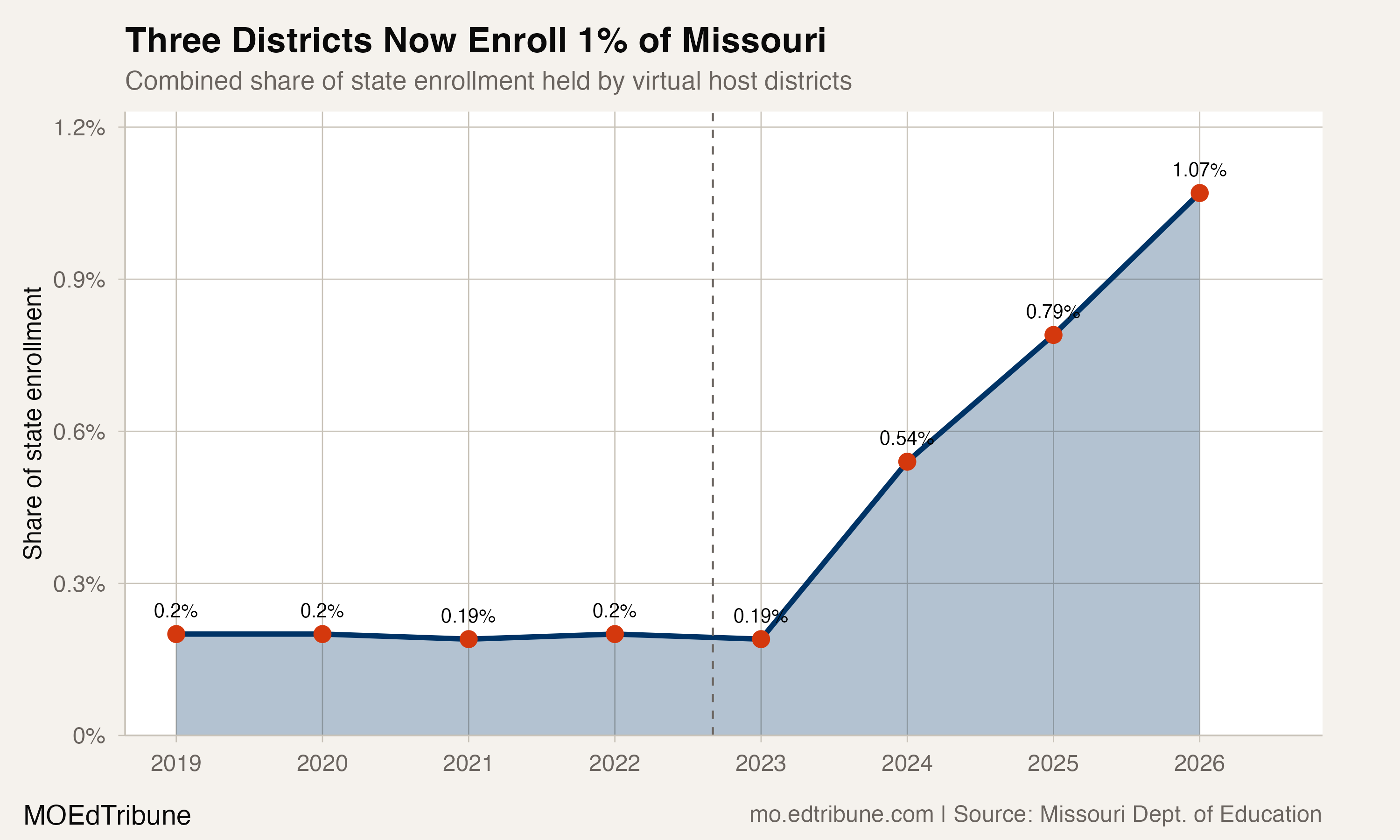
After Missouri removed enrollment barriers in 2022, three small districts hosting virtual academies grew by up to 559%, reshaping the state's enrollment map.
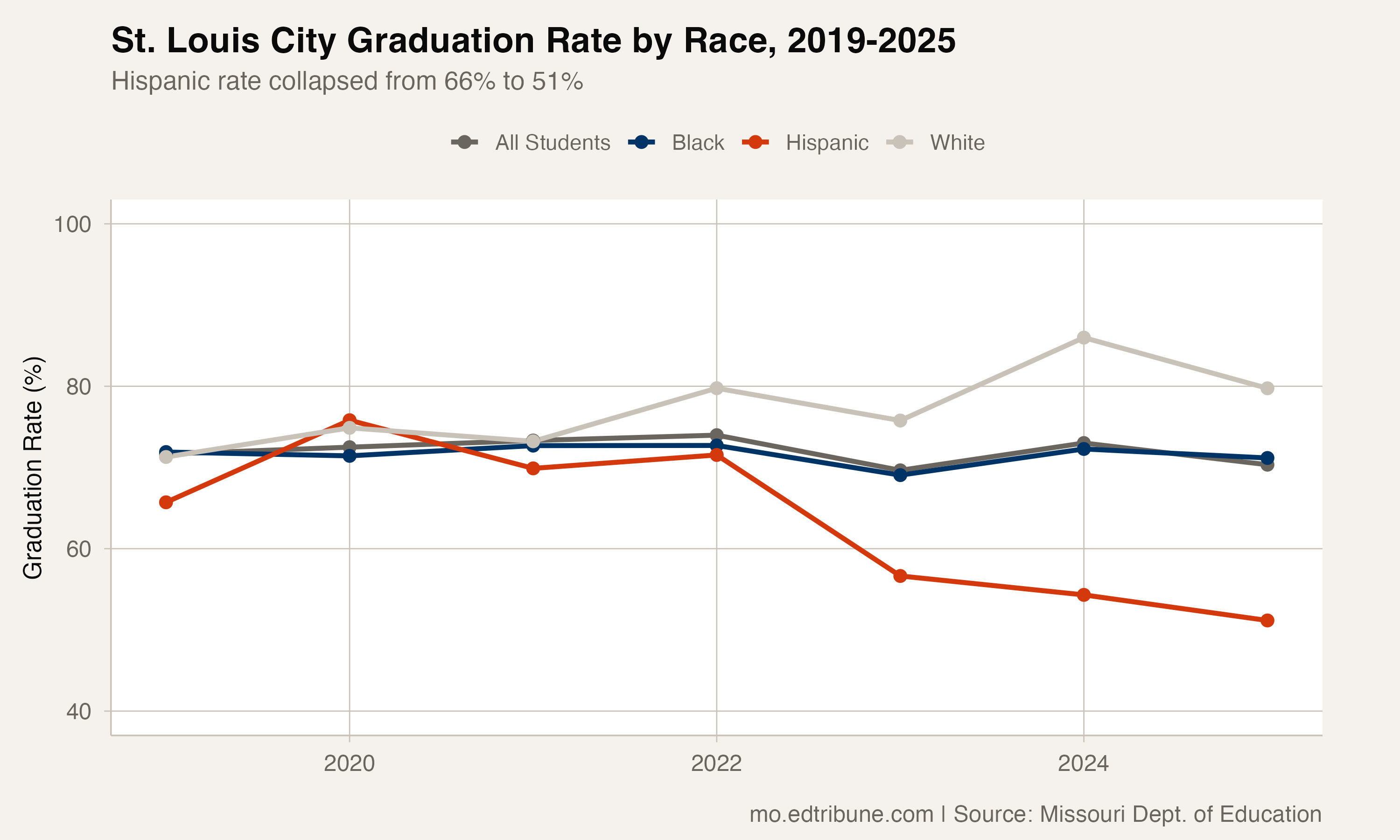
Missouri's graduation rate hit an all-time high, but St. Louis City remains trapped at 70 percent with a collapsing Hispanic rate and a shrinking cohort.
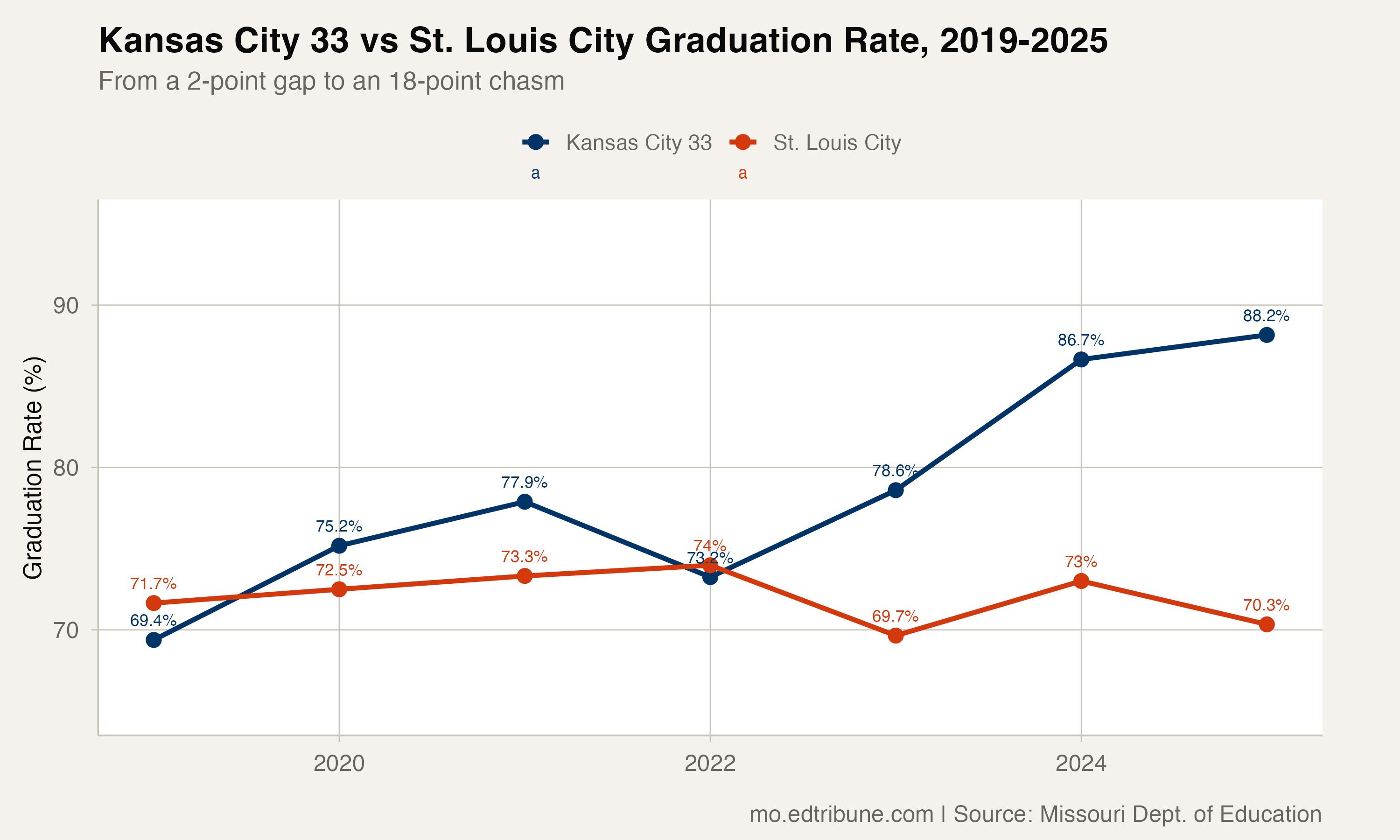
Kansas City 33 and St. Louis City were within 2 points of each other in 2019. By 2025, an 18-point chasm had opened between Missouri's two largest urban districts.
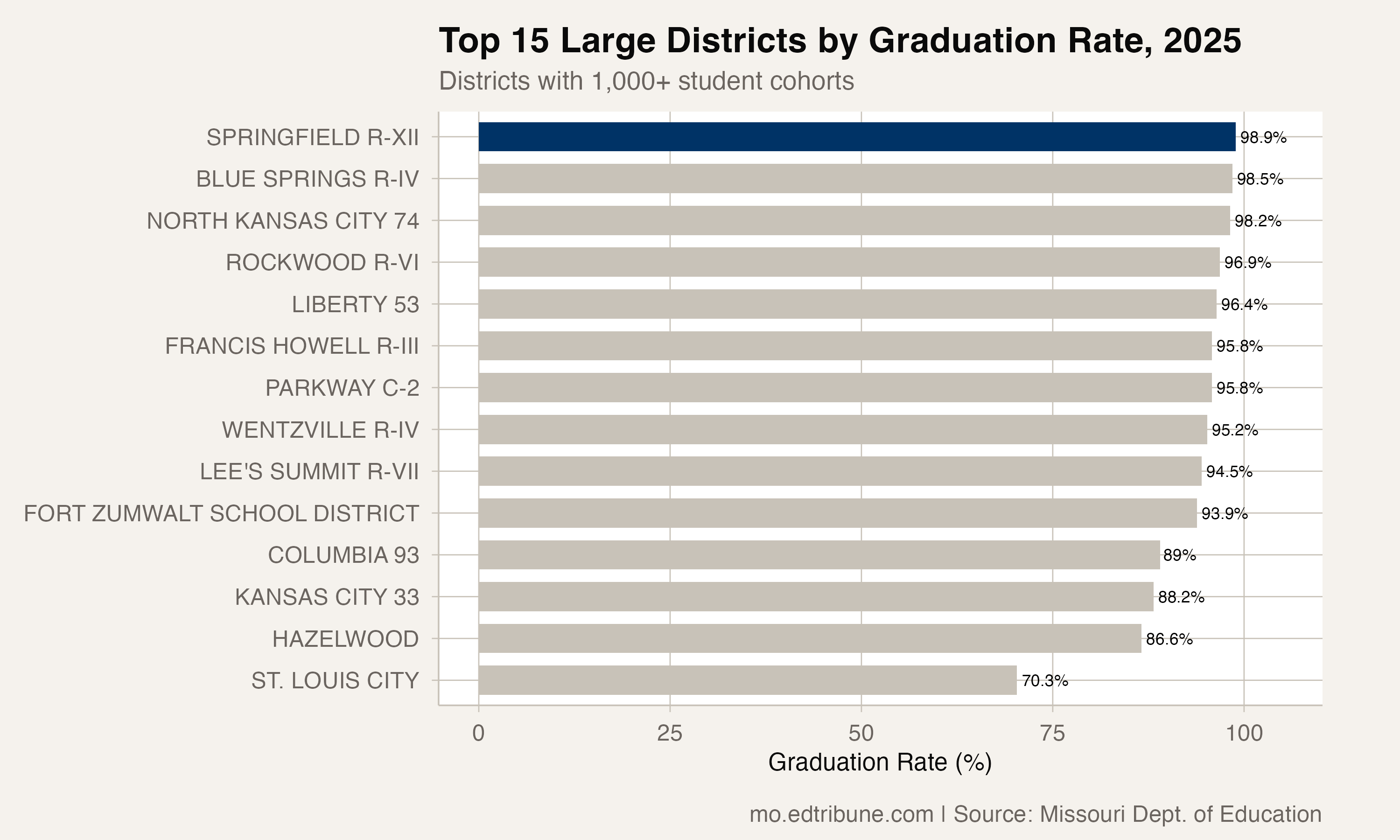
Springfield R-XII improved its graduation rate every year since 2019, reaching 98.9 percent with a 2,017-student cohort. It now leads all large Missouri districts.
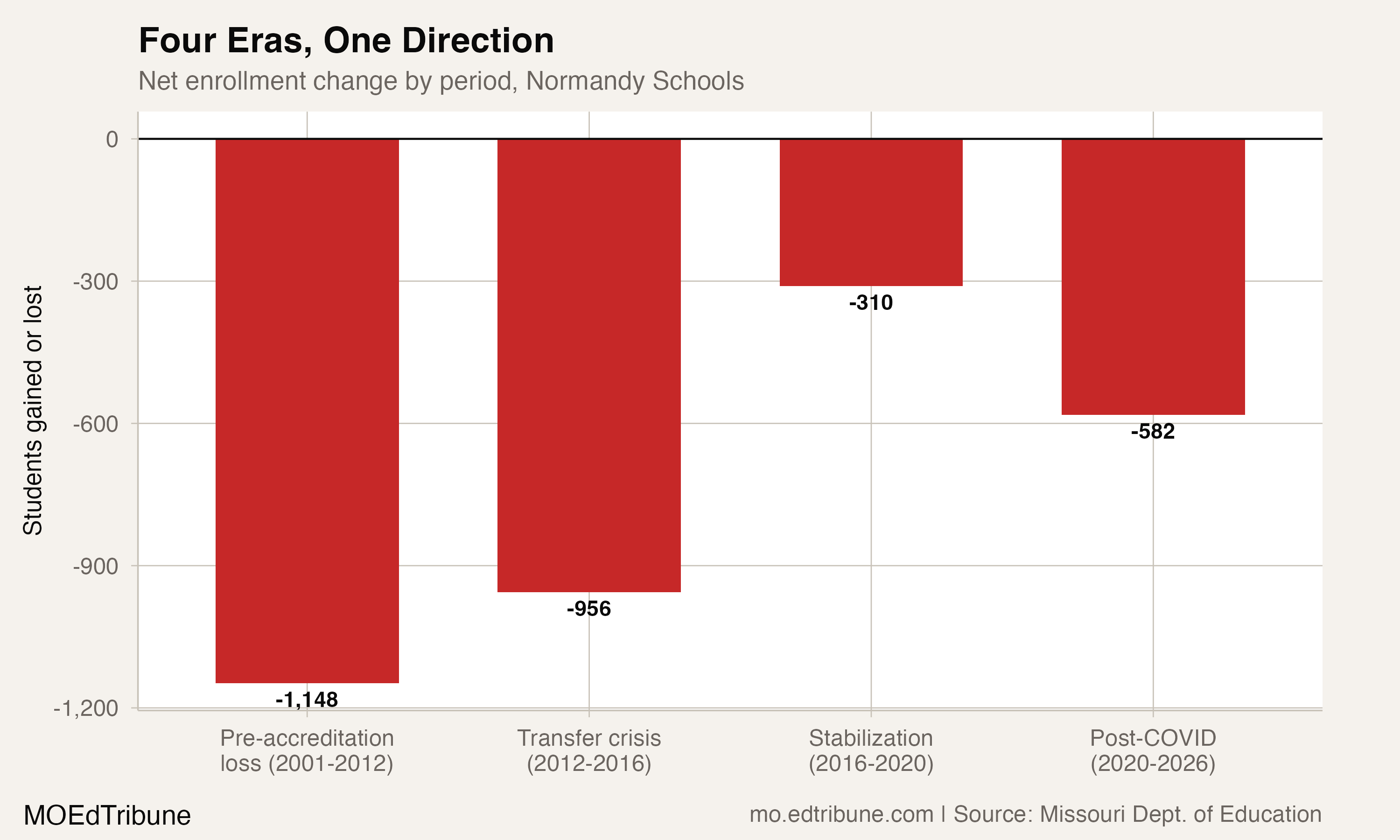
Normandy Schools Collaborative fell from 5,585 to 2,589 students over 25 years, a 53.6% decline driven by accreditation loss and state takeover.
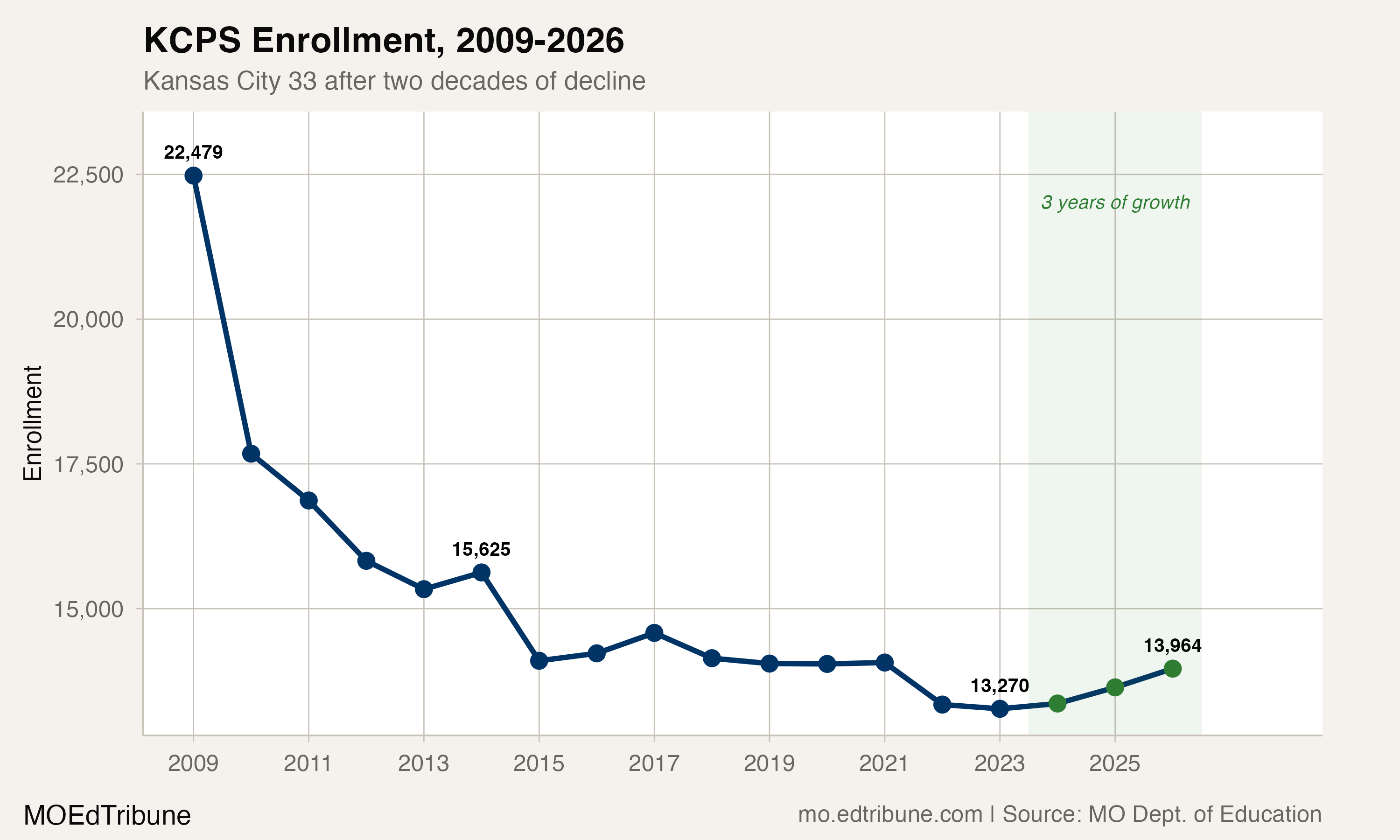
After losing 60% of its students, Kansas City Public Schools has posted three years of growth, fueled by immigrant families.
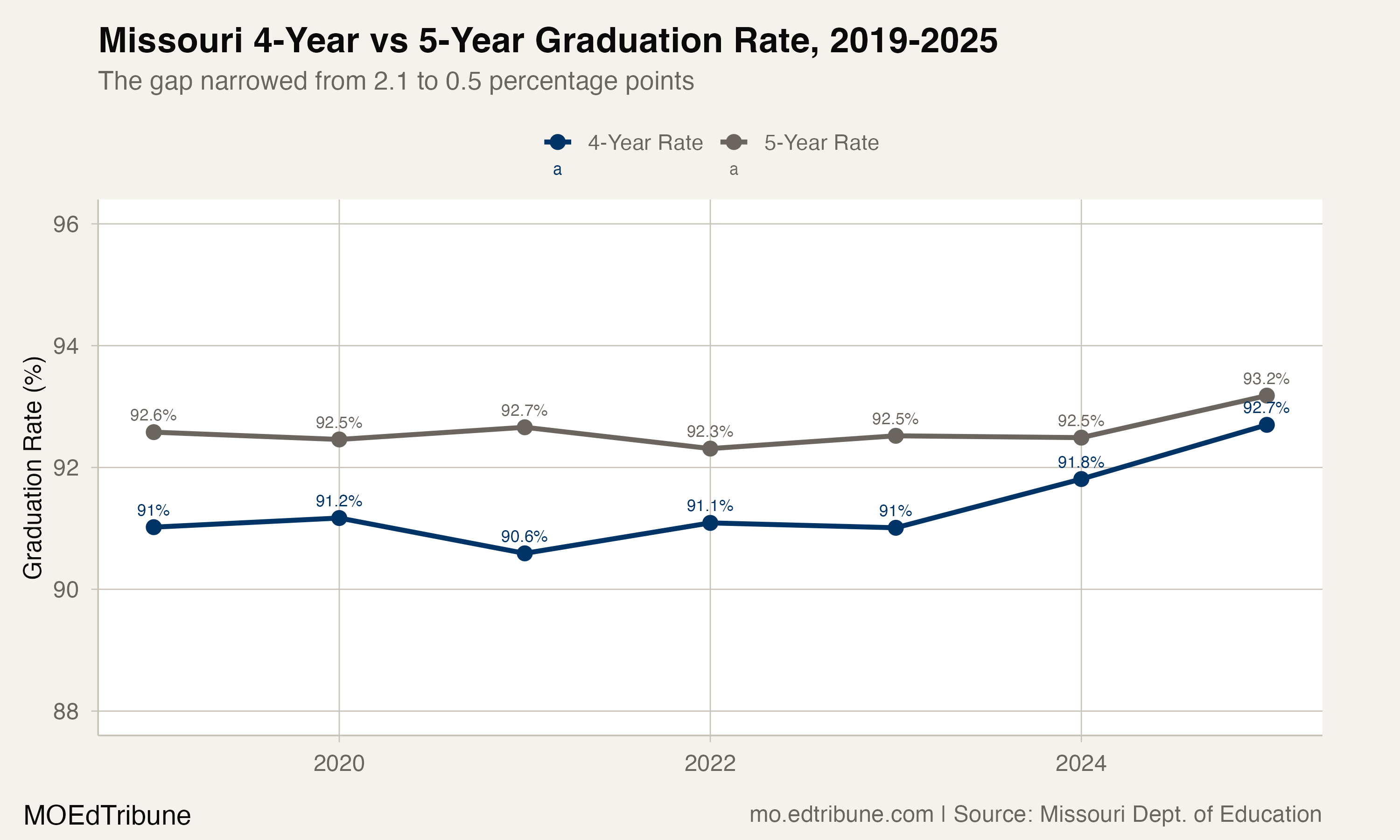
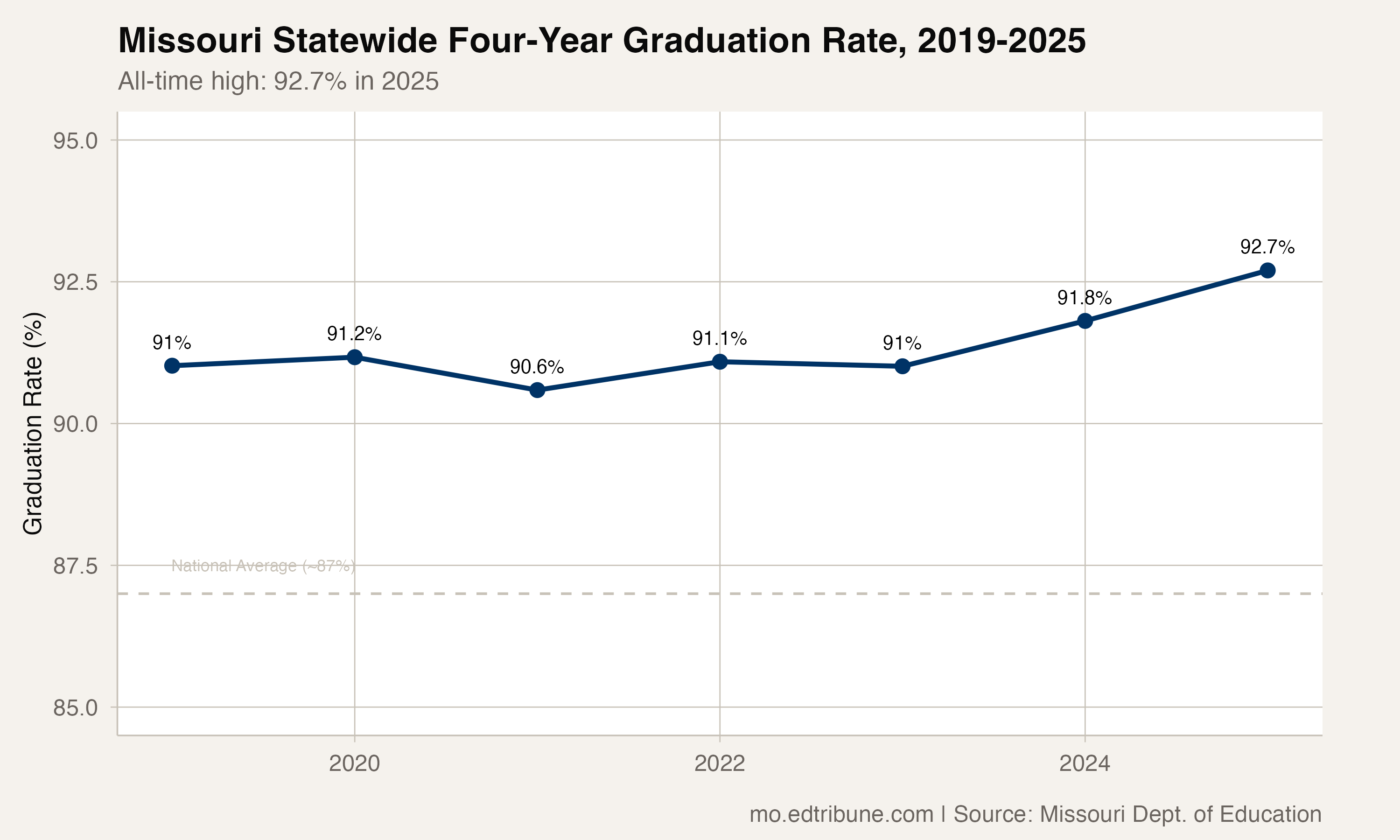
Missouri's four-year graduation rate reached 92.7 percent in 2025, the highest on record, with a growing cohort that produced nearly 4,000 more graduates than in 2019.
Six of nine inner-ring St. Louis suburbs hit all-time enrollment lows while outer-ring districts surged, a textbook enrollment donut reshaping the metro.
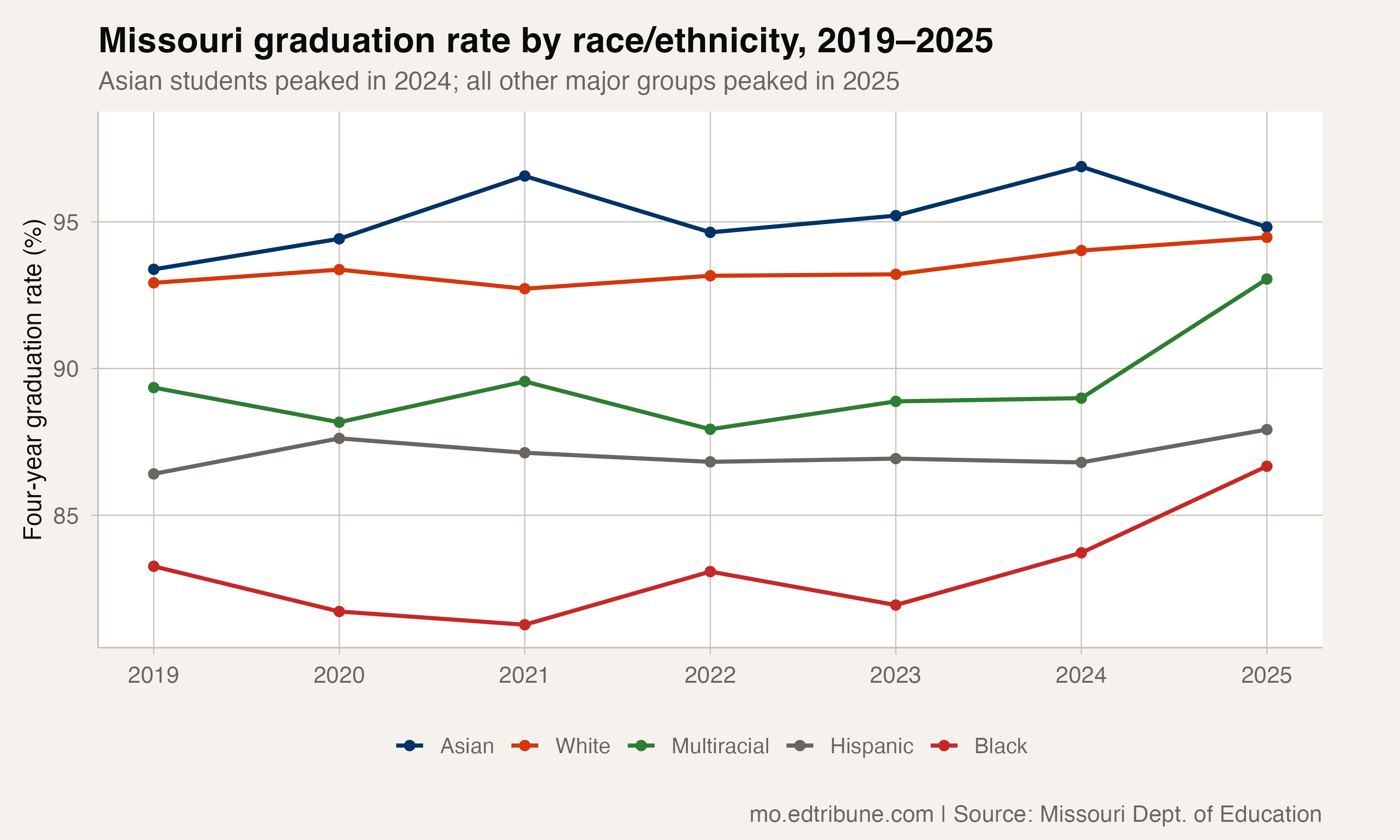
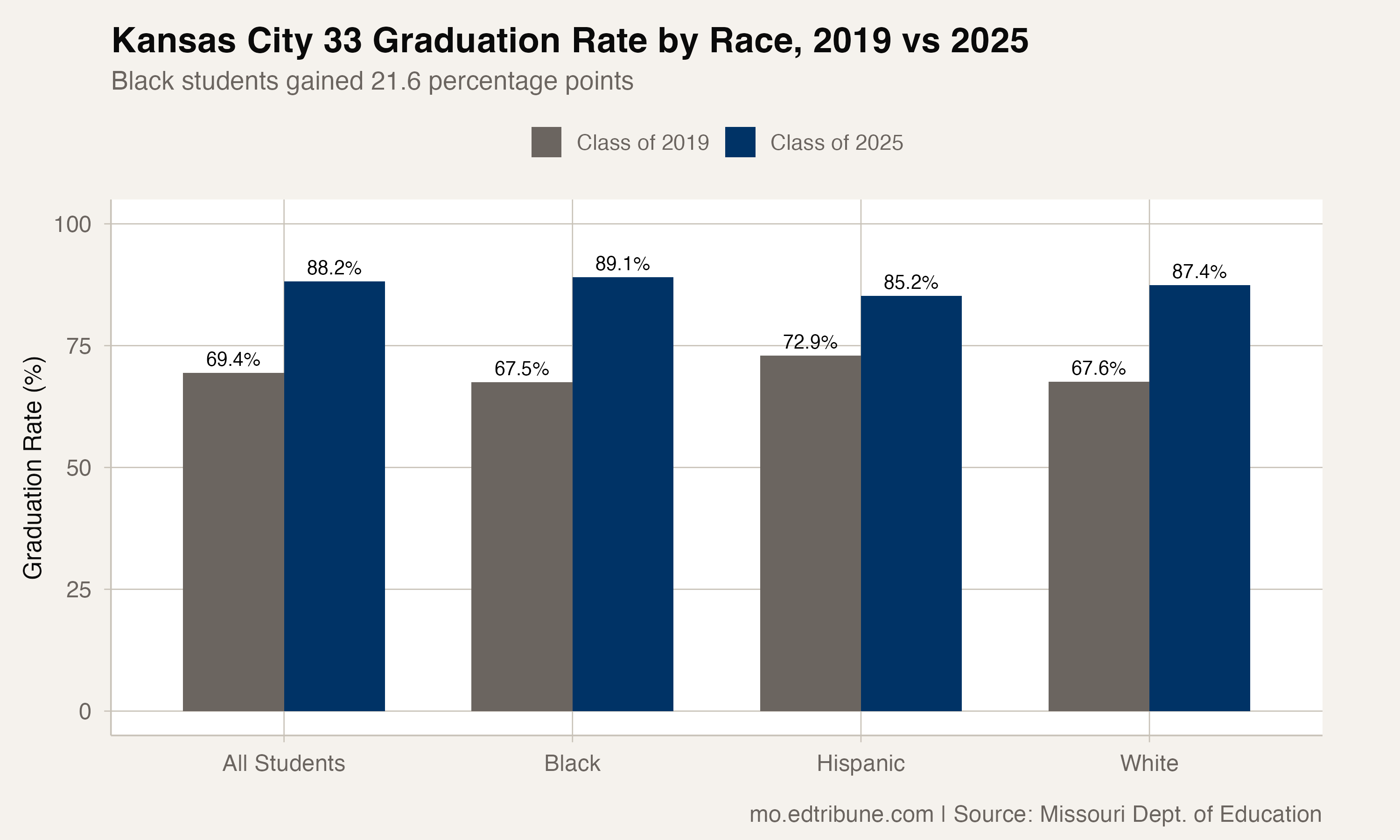
Kansas City 33's graduation rate climbed from 69.4 percent in 2019 to 88.2 percent in 2025, a turnaround driven by even larger gains among Black students.
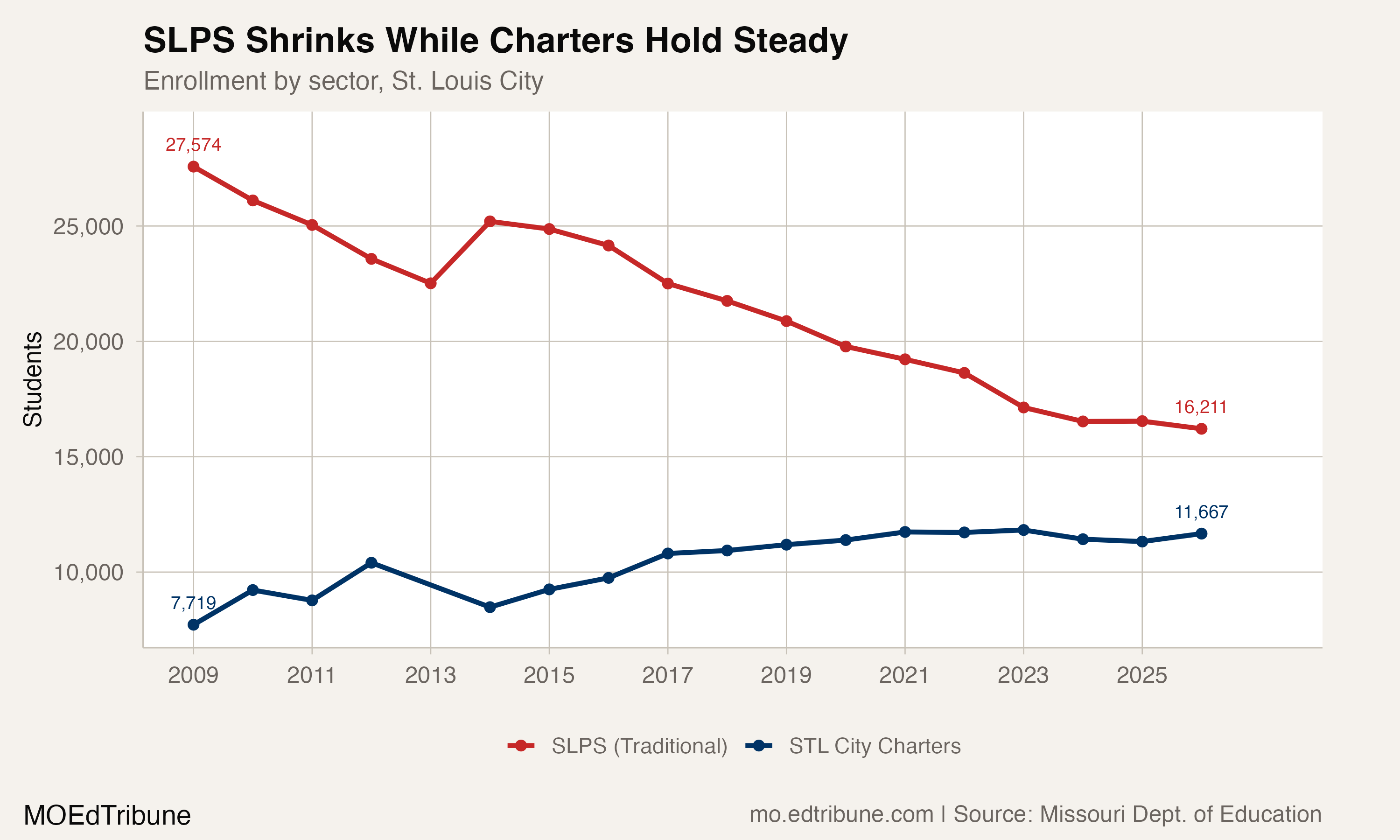
St. Louis Public Schools enrolled 43,420 students in 2001. By 2026, just 16,211 remain, a 62.7% collapse that now threatens the district's accreditation and half its buildings.
Missouri's 855,081 public school students in 2025-26 marks a 25-year low, with losses accelerating from 220 students per year in the 2000s to nearly 3,900 per year since 2019.